
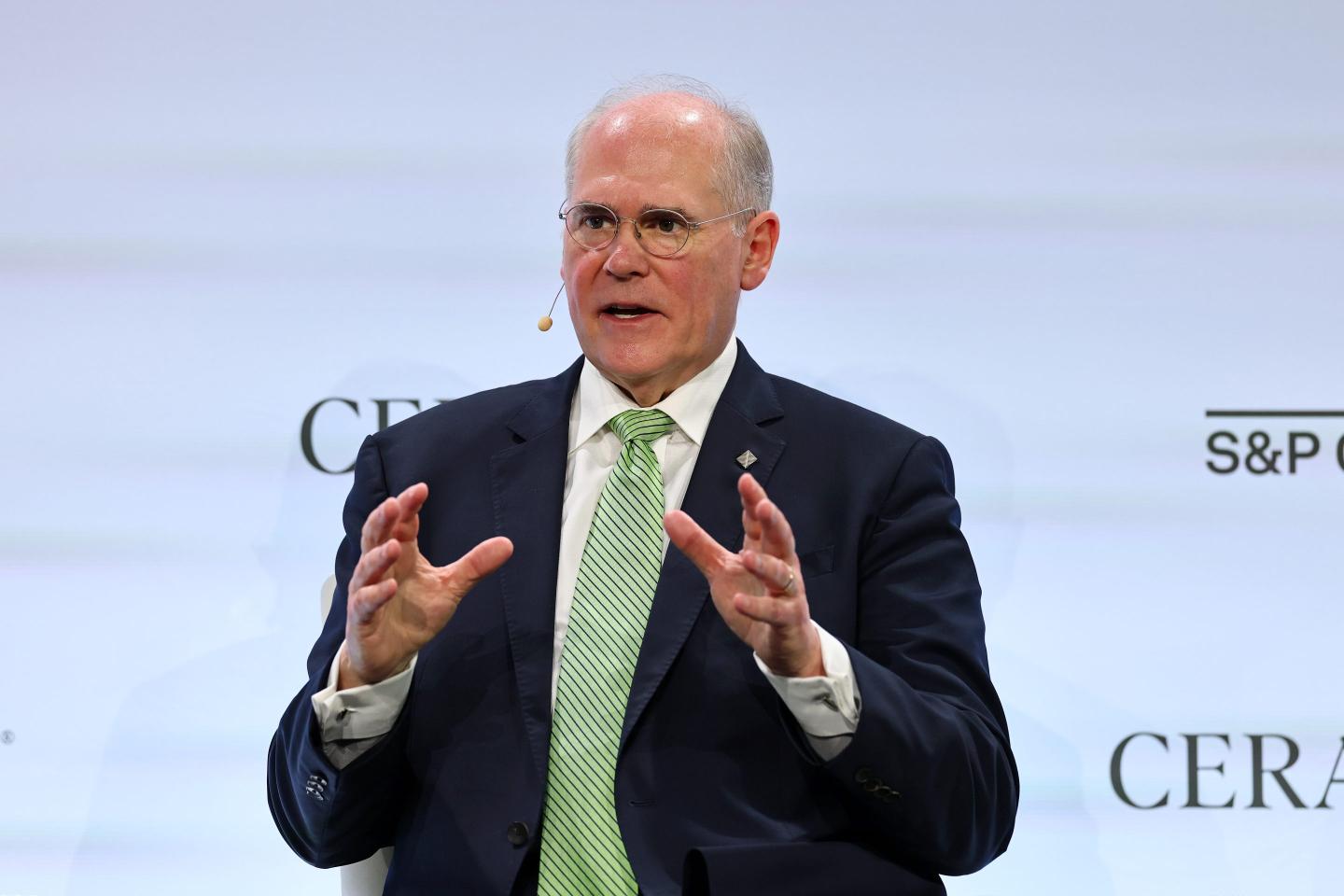
Pierce Norton, chief executive of ONEOK, announced the acquisition of Brazos Midstream's Permian Basin assets for $4.42 billion, adding 700 miles of gathering lines and 1.2 billion cubic feet per day of processing capacity. The deal follows recent purchases by other majors, including Williams' $5.5 billion buy of Momentum Midstream and Western Midstream's $1.6 billion purchase of Brazos' Delaware Basin facilities.
What is driving the wave of acquisitions?
Since the shale boom began in 2006, U.S. natural-gas output has more than doubled and now accounts for about a quarter of global supply, surpassing Russia. The Department of Energy projects output could rise another 35 percent by 2050, reaching roughly 150 billion cubic feet per day, up from 50 billion cubic feet per day two decades ago. This surge is powered by two trends: expanding liquefied natural-gas (LNG) export facilities on the Gulf Coast and soaring domestic demand from AI-driven data centres.
Why does it matter for Europe and the wider market?
Europe is a major consumer of LNG, and higher U.S. production could stabilise global gas prices while offering an alternative to Russian supplies. At the same time, AI data centres, many of which are being built in Texas and Louisiana to tap cheap gas, create a new, high-intensity demand that reshapes the value chain from wellhead to end-user.
"They're getting the gas to help feed that AI demand to profit along every step of the value chain," said London Spivey, energy analyst at East Daley Analytics. "They pull it out of the ground, they bring it to their plant, they process it, they're able to put it on one of their pipelines and transport it to that end demand, whether it's data centres or feeding LNG."
What happens next for ONEOK and the pipeline sector?
ONEOK is not only expanding through acquisitions. The company, together with partners, is constructing the 450-mile Eiger Express Pipeline to move gas from the Permian to Houston, slated for 2028. Customer interest prompted an increase in planned capacity from 2.5 billion to over 3.5 billion cubic feet per day.
Financing the Brazos deal involves a $9 billion investment from Apollo Global Management, split between $4 billion for the purchase and $5 billion to reduce debt. Norton acknowledges the debt load but sees the move as a "decisive step" in a long-term strategy to build scale in the most attractive producing regions.
"There will eventually have to be more drilling in the United States than what's going on right now, which will probably mean that gas price does creep up," Norton told reporters. "The demand is going to be there, and it's going to be driven by LNG exports and the AI data centres."
Looking ahead, the industry expects a wave of long-haul pipelines linking West Texas to the Gulf Coast, aimed at eliminating regional price spikes that once forced producers to pay to have excess gas removed. As Norton put it, "The problem with the gas price in the Permian is going to get solved when all these pipes get built out."
With the Permian's oil output stabilising and gas ratios rising, ONEOK's integrated approach, from extraction to processing to transport, positions it to capture a larger share of the emerging AI-fuelled gas market.