
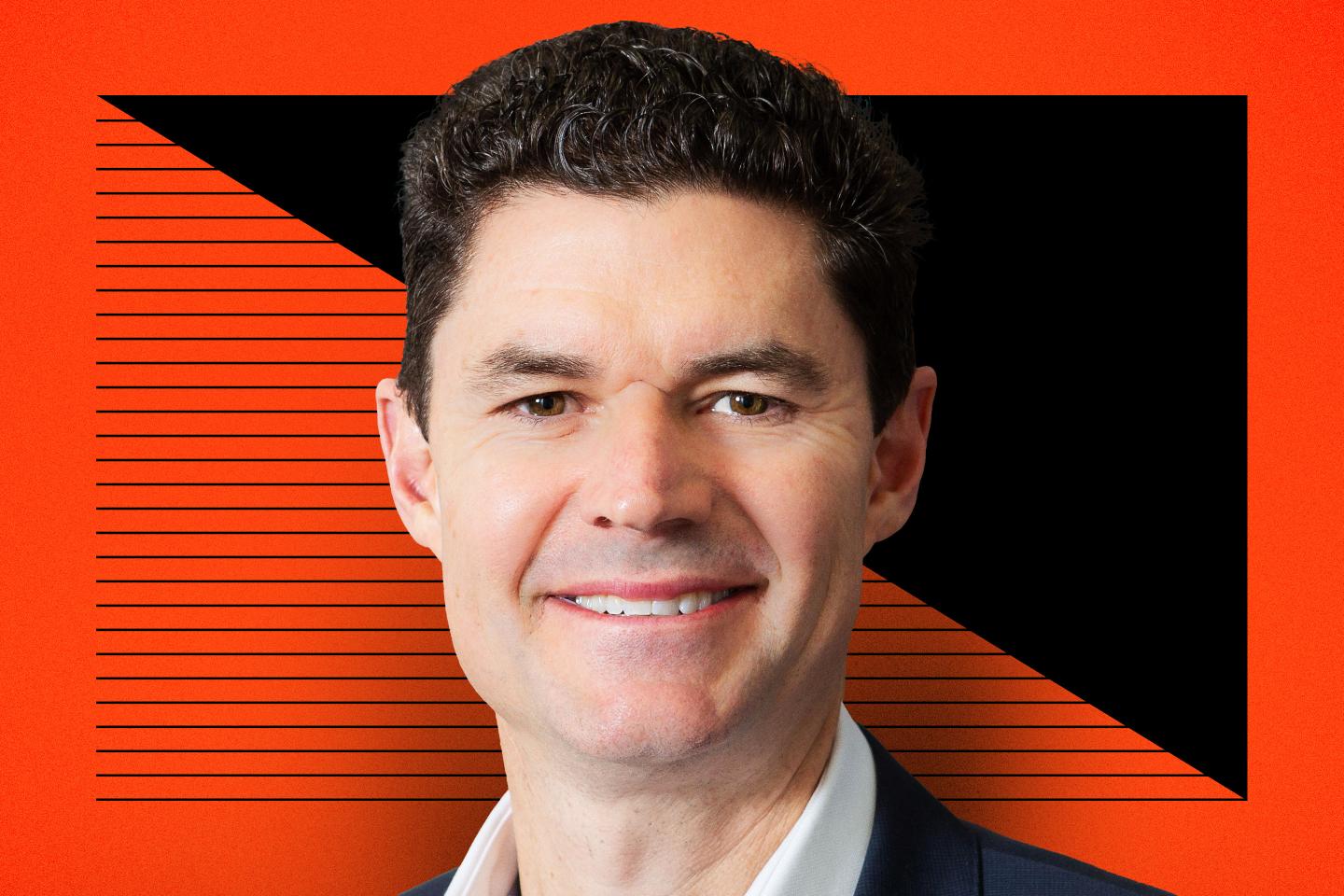
Michael Boyle, senior vice-president and managing director for Greater Asia at HP, told reporters that the music drifting through Changi Airport is being created in real time by artificial intelligence. The soundtrack adapts to weather, crowd levels and time of day, offering travellers a dynamic audio experience.
"If you're walking through Changi, you'll be hearing a soundtrack that is literally AI," Boyle said.
AI soundtrack and the Garage 2.0 accelerator
The tunes are produced by Singapore start-up Wubble AI, which joined HP's "Garage 2.0" accelerator programme in July after the company backed the venture. Garage 2.0, launched in October 2025, revives the spirit of HP's original garage in Palo Alto where founders Bill Hewlett and Dave Packard first built computers.
HP runs the programme with global venture firm Antler, which has invested in more than 1,400 companies across 30 markets. Boyle says the fast-moving start-ups give insight into what can cut through the complexity of a large matrix organisation.
HP's Asian heritage and current market share
HP opened its first Asian office in Singapore in 1969 and a year later built a manufacturing plant in Redhill, where a modest workforce assembled the iconic HP-25 calculator. Today the group operates factories and supply-chain hubs in China, Thailand and Vietnam, with call centres in Malaysia and India. The Asian region contributed just over 25 % of HP's revenue in the most recent quarter (May-July).
From printers to AI-powered PCs
While HP remains known for its printers, Boyle rejects the notion that print is dying, pointing to continued demand in education and health-care. Since last year the company has rolled out AI-enhanced printers that integrate Microsoft Copilot, allowing users to print from a shared cloud and generate AI summaries of scanned documents.
Print revenue fell 2.2 % in the latest quarter, reflecting softer demand in China and shifting consumer habits. To offset this, HP is betting on AI-enabled personal computers. The firm unveiled its first AI laptops in 2024, including the OmniBook X AI PC and the EliteBook Ultra AI PC.
Interim CEO Bruce Broussard told analysts that AI PCs are expected to account for half of HP's total shipments by year-end.
"The AI PCs seem like a good idea with regard to creating value for both the customers (reduced dependence on cloud, lower costs of tokens) and HP itself (premium prices)," said Nitin Pangarkar, associate professor of business strategy at the National University of Singapore.
Experts warn that competitors can quickly copy AI features, potentially eroding margins unless HP secures proprietary technology.
"The real test for HP is whether AI becomes an organising principle for the business, rather than a feature layered onto an existing portfolio," observed Tan Joo Seng, associate professor at Singapore's Nanyang Technological University.
Adoption of AI PCs varies across the region. In Japan, for example, organisations await strong proof points before committing. The devices cost 10-30 % more than standard PCs because they house a neural processing unit (NPU) that handles AI tasks locally, reducing latency, token costs and data-security concerns.
Future steps and the role of AI assistants
Earlier this year HP introduced HP IQ, an on-device virtual assistant that runs a 20-billion-parameter model without cloud reliance. Boyle predicts that such assistants will become commonplace within the next 12 to 18 months as companies look to curb token expenses.
Beyond the boardroom, Boyle is a musician. He composed an anthem for the "Greater Asia" theme using Wubble AI, then had his team perform the track. He says the human element is what makes the music memorable.
Boyle will discuss these initiatives at the EuroHerald Leaders Forum in Macau on 8 September.