
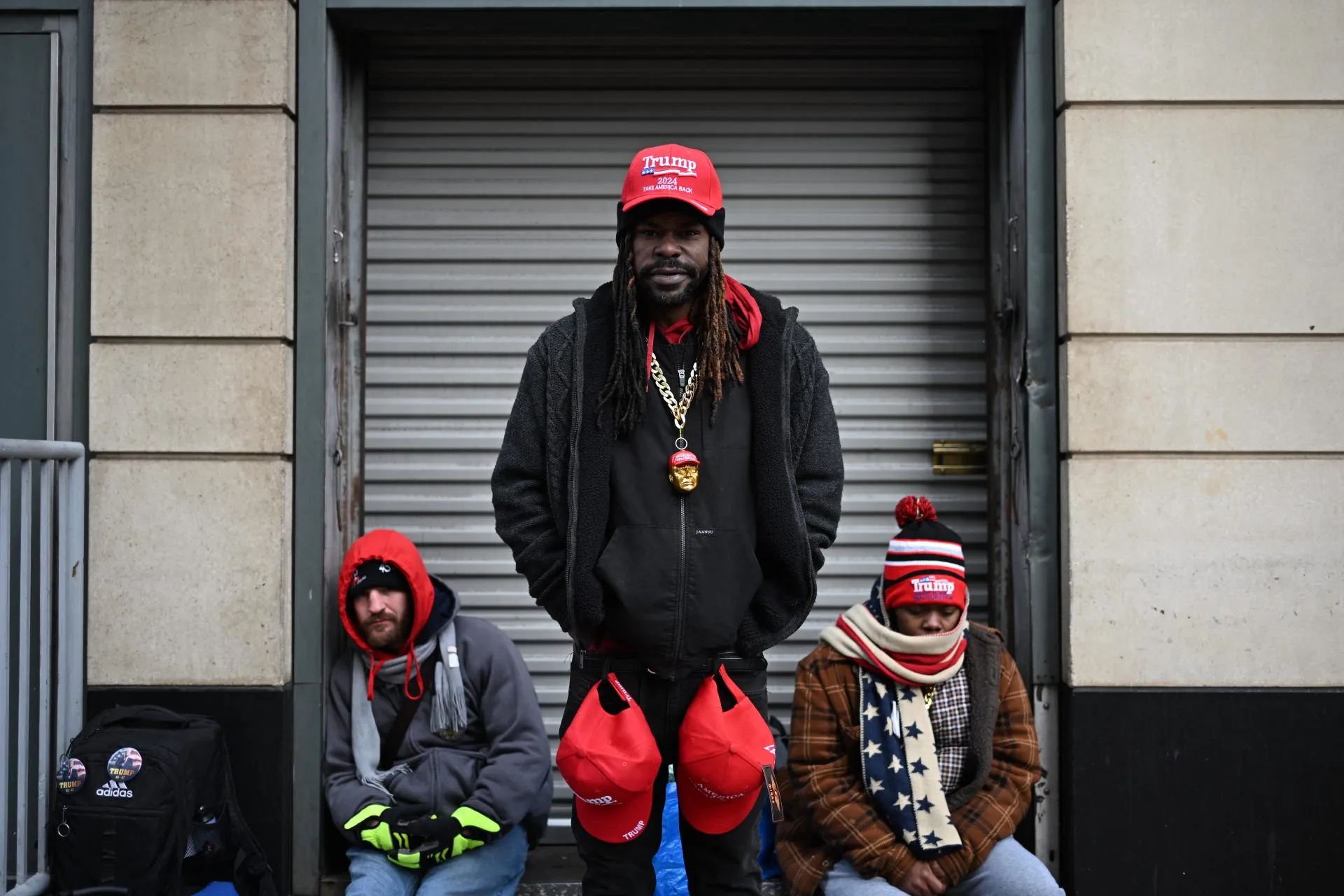
The MAGA movement defines itself as an uprising against a corrupt establishment. Yet its most visible leaders are a billionaire property developer, a cabinet stocked with Ivy League graduates, and a chorus of support from the world's richest technology executives. This paradox, an anti-elite insurgency steered by the ultra-wealthy, has become the defining contradiction of modern American politics.
The anti-establishment movement led by billionaires
Donald Trump, the movement's figurehead, built his fortune on a substantial inheritance from his father before graduating from the University of Pennsylvania's Wharton Business School. His administration's upper ranks have been filled with individuals of significant personal wealth and elite educational backgrounds. Members of his family have occupied influential positions. Prominent supporters include Jeff Bezos, Elon Musk and Mark Zuckerberg, three of the world's most powerful tech magnates.
Defenders of the movement argue that leadership demographics miss the point. They contend the policy agenda reflects the values of what Europeans would call the working class, a group Hillary Clinton once dismissed as a "basket of deplorables". The electoral data complicates that dismissal. In 2024 roughly half the American electorate, spanning urban and rural districts, backed Trump. His support increased among women, Latino voters and African-American voters.
A coalition that defies traditional left-right labels
MAGA has fused a deregulatory, low-tax economic programme with protectionist trade barriers and strict immigration controls. This hybrid platform binds together commercial elites and voters who feel abandoned by globalisation. At the same time, the movement has made hostility to progressive social values, often labelled "woke", a central organising principle. Its target is the equity framework that has shaped anti-discrimination policy since the 1960s. Critics argue equity policies ignore the economic decline that has hollowed out the industrial heartland.
The result is a political landscape where two factions claim to dismantle inequality while viewing each other with mutual incomprehension. MAGA occupies ground once held by the old left: scepticism of global capitalism, support for industrial strategy, and protectionism. Its opponents rally around diversity and inclusion as remedies for social hierarchy. Both sides deploy political elites to punish the supposedly corrupt beneficiaries of the system. Democrats favour rhetorical appeals to cosmopolitan justice; Trump uses blunt, demotic language to channel resentment.
Historical roots of American anti-elitism
Wariness of concentrated power in America predates the current era by nearly two centuries. Andrew Jackson championed the "common man" against northeastern "aristocrats" in the 1830s. The concept of a cohesive ruling class gained traction after the Second World War. C. Wright Mills' 1956 book The Power Elite argued that the military, federal government and large corporations formed an interlocking directorate. The thesis resonated widely but was criticised for flattening the layered complexity of capitalist societies, where inequality is graduated rather than binary.
Elite theory and the reality of modern democracy
In his recent book Elites and Democracy, Hugo Drochon traces the intellectual lineage to three turn-of-the-century thinkers: Gaetano Mosca, Vilfredo Pareto and Robert Michels. Writing as mass suffrage spread across Europe, they warned that popular rule could enable charismatic authoritarianism. Their debates shaped twentieth-century political science, splitting scholars between those who feared the irrationality of crowds and those who sought to bypass the state entirely.
Drochon argues that modern democracy is better understood as a dynamic contest among fluctuating interest groups, not a static oligarchy. Coalitions form, advance a shared cause, then fracture as conditions change. This fluidity is visible in the erratic fortunes of parties across the UK and Europe over the past two decades.
Fractures emerging in the MAGA alliance
More than a year into the second Trump administration, stresses are visible within the coalition. Held together by aggrieved nationalism, the movement shows signs of splintering over the Epstein files, the future of artificial intelligence, and foreign entanglements. Confused messaging on Iran, from J.D. Vance, Marco Rubio, Pete Hegseth and Trump himself, reflects deeper strategic divisions. An inward-looking "America First" posture strains against a military apparatus oriented toward global projection. Supporters of both tendencies are being pulled in opposite directions.
The leading opponent of liberal elites may ultimately be remembered as an oligarch-in-chief. New grievances and new villains will mobilise fresh political collisions, continuing a cycle that has structured American democracy since the age of Jackson.