
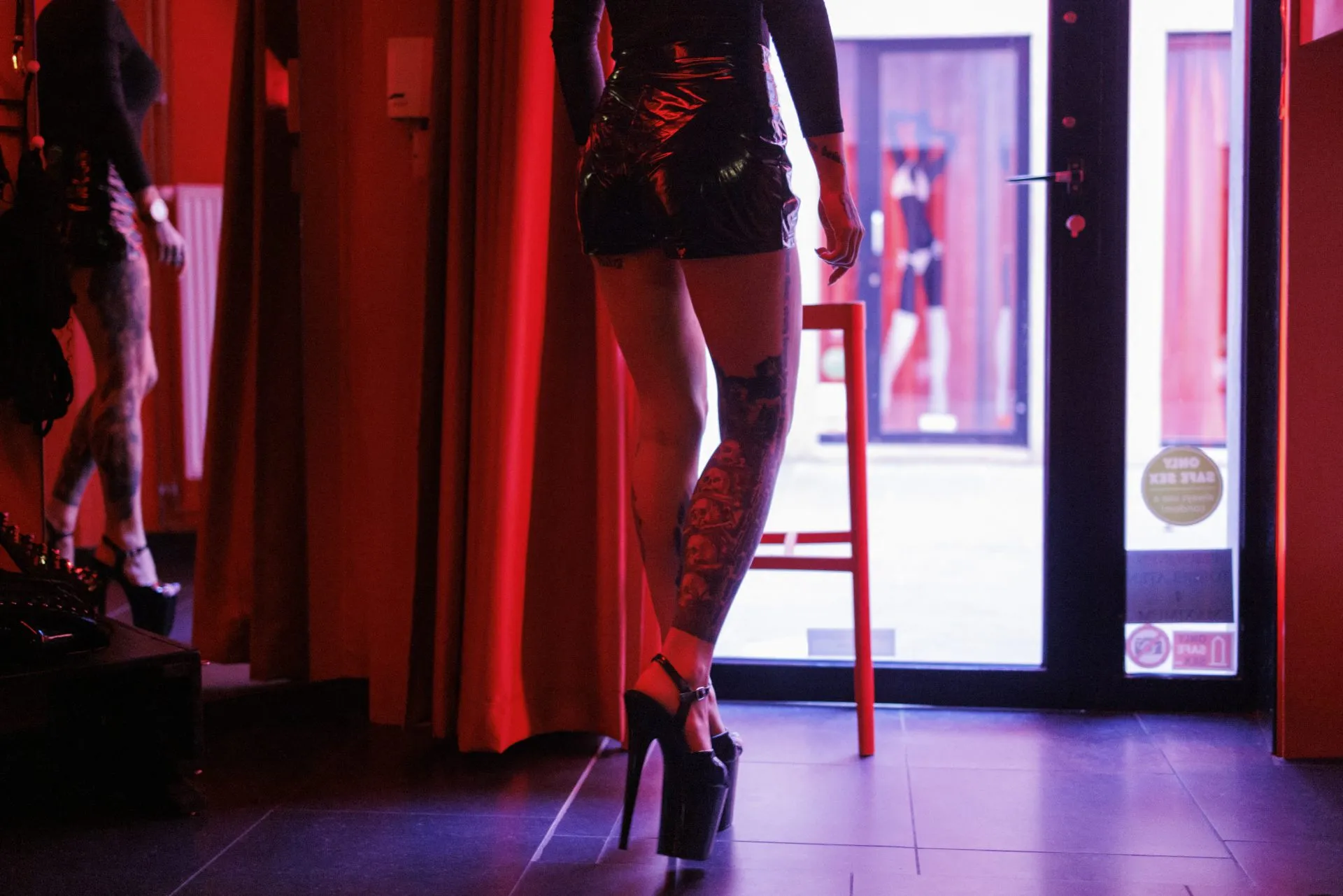
A short walk south from the European Parliament in Brussels lies the Avenue Louise, the Belgian capital's answer to the Champs-Élysées. By day it is a three-kilometre stretch of high-end restaurants, luxury hotels and designer boutiques in handsome Beaux-Arts buildings. By night, women in tiny skirts, towering heels and fishnets cluster around the most exclusive addresses. They are looking for men who will take them to apartments or hotel rooms; they would refuse the back seat of a car.
Legislation that left most women behind
In 2022, Belgium became the first country in Europe to fully decriminalise its entire sex trade. The legislation removed what activists termed "voluntary sex work" from the scope of criminal law and invited pimps, brothel and escort agency owners to see themselves as legitimate businesspeople. Then in 2024, following further lobbying from pro-prostitution campaigners, Belgium went further, offering formal employment contracts to women who work as prostitutes in licensed brothels. Coercing others remains illegal, with unlicensed pimps liable for steep penalties.
In theory, this should mean that Belgium's estimated 30,000 women in prostitution are now workers like any other, with access to maternity leave, sickness and holiday pay, and union membership. Supporters claimed the legislation would "lay the groundwork for broader societal change in the perception of sex work and sex workers". But the reality has fallen far short.
These labour contracts are not available to students, part-time workers, or women without work or residency visas. Given that the majority of women in the Belgian sex trade are trafficked, and therefore undocumented, they are excluded. So too are those in the "sugar babe" trades, stripping and porn. To date, only four businesses have been legally recognised as legitimate brothels compliant with the new laws.
In other words, the majority of women in this "business" are excluded from legislation that activists celebrated as "transformative" and "historic". There have been no cases in which a "brothel worker" has been granted sick leave, maternity pay, or taken a case against a brothel manager to an employment tribunal. Belgium has contrived to empower every one of its pimps and open up unparalleled choice for the male sexual consumer, while doing almost nothing to improve the lives of the women whose "work" makes any of this possible.
On the outskirts, a different reality
On the outskirts of the city, far from the polished facades of Avenue Louise, the trade is far less glossy. George operates his business from a former family home on a residential street, advertising on the internet. Inside are three cluttered rooms, their walls adorned with pornographic art. George tells me he has "many regulars". Though he is currently operating without a licence, he hopes to become what Belgium's new legislation terms a "brothel manager", a legal employer entitled to hire women as "sex workers" under formal contracts.
George speaks the language of regulation fluently. "It's all about giving proper rights to the girls," he says, "and doing the right thing." But then he shows his hand: "I want to have a reliable workforce. If they work for me, instead of just doing a shift when they feel like it, I have more control." Like all pimps, he is in it for the profit. And if George gets his licence, in the eyes of the law he will no longer be a pimp: he will be a respectable businessman with a "reliable workforce" doing his bidding.
Why most brothels stay unlicensed
The fact that so few sex businesses, just four, have so far been given the green light reflects the grim realities of the trade. The official guide to occupational health and safety in the sex trade in New Zealand, which decriminalised prostitution in 2002 and is a model for countries like Belgium, addresses condom breakage, repetitive strain injury, violence from punters, and rape, described euphemistically as an unfortunate occupational hazard which occurs "where workers are forced by clients to have sex without a condom against their will". It also includes advice on "mopping up semen" potentially contaminated with HIV.
Last year, Belgium's Public Health and Social Affairs Minister announced that seven STIs, hepatitis B, papillomavirus, syphilis, chlamydia, gonorrhoea and trichomoniasis, would be officially recognised as "occupational illnesses". The health and safety advice in general is provided by pro-sex work lobbyists.
It is not in most brothel owners' interests to become legitimate businesses. It would force them to comply with health and safety measures, and most are surely aware that the conditions in which they prostitute women would never pass muster. Some have criminal records and do not want the scrutiny, or fear prosecution if they fail compliance checks. And most obviously, pimps do not wish to pay tax.
Rue d'Aerschot: the window brothels
The reality remains that despite the reframing of pimps as legitimate business owners and vulnerable, exploited, frequently trafficked women as empowered "sex workers", much prostitution in Belgium remains in the control of criminals. This much is clear from a walk down the Rue d'Aerschot, close to Brussels-Noord station. The street is filthy with litter and drug paraphernalia and lined with "window brothels" in which bikini-clad women, perched on stools, wait for punters.
The windows are rented by small property companies and private landlords, then sublet to the women in two shifts, 6pm till 6am and then a swift crossover. Lit up in neon red, they are starkly grotty. Imagine a butcher's with its merchandise strung up for perusal in large display windows, only here, what is on sale is human.
At just past six in the morning, groups of young men loiter. They are pimps: watching the street, smoking and speaking to a smattering of punters as they come and go, running through the prices and "services" on offer. The men are mainly Romanian and Bulgarian. Many sell drugs as well as sex, and some are part of trafficking gangs. These men are almost certainly operating illegally, in spite of the change in the law, which actually has hardly any effect on them at all. It is a free-for-all, untroubled by the police.
"They often go for a quickie on their way to work, they want the women to be 'fresh', hence going there as they change shifts," Taina Bien-Aimé tells me. She is director of the Coalition against Trafficking in Women (CATW) and has been watching the Belgium sex trade closely since it was legalised. "For these men, it's just like having their morning coffee."
International comparisons: Germany and the Netherlands
This is no flippant analogy. During a previous investigation into the legal sex trade in Switzerland, an application by businessman Bradley Charvet in Geneva for a licence to open a "fellatio café" was discovered. For 50 Swiss francs, customers were invited to choose a woman from an iPad menu, then order her to perform a sex act along with his cappuccino. This is where the logic of legalisation leads: a whole new menu of options for men. What it has not done, anywhere it has been applied, is improve the lives of women.
The Netherlands legalised its sex trade in 2000. Only 5% of women who work as prostitutes have registered for tax. Germany introduced legislation in 2002 that meant women in prostitution could, in theory, enter into employment contracts, sue for payment and register for health insurance, pension plans and other benefits. It did not work. Out of hundreds of thousands of women in the sex trade, only 44 registered for benefits prior to it becoming mandatory. Now that it is a requirement, only a minority have done so. Germany has become the "bordello of Europe", with reportedly more prostitutes per capita than Thailand. It is a key example of how decriminalisation expands demand and creates the conditions in which trafficking can flourish.
It is estimated that anywhere between 200,000 and 400,000 women are in prostitution in Germany, serving over one million men per day. Mega-brothels are now a common feature of German cities, a form of industrialised prostitution. As in a battery farm, owners pack in as many bodies as they can. Some offer "early bird" deals: burger, beer and sex. Others offer "two for the price of one", "happy hours" and "all-you-can-fuck" passes.
Only 1% of women in the German sex trade have entered a full "work-contract" at a brothel or escort agency. A government investigation in 2018 could only identify 76 people who had registered as "prostitutes" in order to access social security.
"You can't call it a job and then have panic buttons in the workspace," Bien-Aimé says. As she explains it, the new legislation only serves to normalise the exploitation and sale of women.
New laws put women at more risk
Indeed, the new laws put women at more risk. One clause in the Belgium legislation stipulates that if a prostitute refuses 10 sex acts or individual clients, the brothel owner can make a complaint about her.
"A woman being unable to refuse certain johns, or sex acts, is called rape in any other circumstances," Bien-Aimé points out.
Nonetheless, the legislators insist they are on the side of the women. By legalising prostitution and giving "workers" protection, Sandrine Daoud, a spokeswoman for the Belgian health minister, wrote, "we hope to enable all sex workers who want to leave the sector to do so". However, she attempts to justify the law in the same breath as undermining it. "While we recognise that not all sex workers perform their activities out of their own free will," she says, "it is much more difficult to get into contact with and inform sex workers about their rights when they hide their activities."
Dissenting voices excluded from drafting
Inevitably, the government did not listen to many dissenting voices when drafting its legislation. Natasha and Charlotte work for Isala, a feminist charity opposed to the new laws in Belgium. "They didn't consult us, they didn't go in the street, they didn't open consultations to those of us that are critical of the sex trade," says Charlotte. "They went through those associations that are openly pro-prostitution."
Last year, Isala submitted a legal challenge to the government with the hope of eventually repealing the legislation and introducing the Nordic model. This model, pioneered in Sweden, criminalises the demand for sexual services and stigmatises the men who go looking for it. Meanwhile, it decriminalises women who work in prostitution and provides "exiting" services to help them out of it.
"In principle, the 2022 labour contract says they should be able to refuse sexual acts without being penalised by the brothel owner, but in reality, the client can do what he wants," says Charlotte. "What control does she have with him when they are alone?"
A union that does not fight for exits
Back on Rue d'Aerschot, squeezed between two window brothels, sits an organisation that describes itself as the "Belgian union of sex workers", or UTSOPI. Set up in 2015, it came to prominence during the Covid lockdowns, its director Daan Bauwens tells me. "Sex workers were not entitled to the same benefits other workers were during the lockdown, so we would raise money to buy them food, and to keep them going. We were on the media a lot, so got quite a few donations."
By the end of 2020, UTSOPI had hundreds of thousands of euros, much of it from the Government. However, none of that money has been used to help women to leave the sex trade, there is no budget for that, Bauwens tells me. After all, if "sex work" is now indeed just like any other work, why would anyone want to get out of it?
Instead, their budget appears to be spent on what he calls "outreach work", meaning the distribution of condoms and hot drinks in the winter, as well as lobbying for decriminalisation and disseminating pro-prostitution views across the media and public institutions. The UTSOPI has never appeared at an employment tribunal, nor intervened in a workplace dispute in the 19 months since the legal change.
"Their main argument is that sex work is not decent work, and everybody is entitled to have decent work, so our law should be repealed," Bauwens says. "The constitutional court will never make a moral judgement. So, I don't think the court will even take the case."
Eunice Osayande and the cost of "decent work"
A short walk from Bauwens's office is Rue Eunice N. Osayande. It is named after a 23-year-old Nigerian woman who was trafficked into Belgium and put to work in the window brothels. Two years later, in 2018, she was murdered by a sex buyer. The street is close to where she was found stabbed to death.
Would the law that was passed four years after her death have saved Osayande from dying in her "decent" job? The evidence strongly suggests not. Trafficking remains rife and its victims voiceless, and the new legislation does not apply to them anyway. Moreover, the arguments made by pro-prostitution lobbyists, that any criminal sanctions against pimps and sex buyers will only drive the activities underground, are plainly unfounded.
"Decriminalisation does the opposite of driving prostitution underground," says Bien-Aimé. "It expands the market, and we know that it leaves the women no safer. Just look at the murders of prostituted women in countries such as the Netherlands, to know that this is not about safety for the women, but simply making it easier for the profiteers to advertise for custom."
No "better class of client"
Another promise made by the Belgian legislators was that if men knew these women were legitimate workers, they would treat them with more respect. The new laws would normalise the reporting of abusive punters and reduce social stigma. It would attract a "better class of client". There is absolutely no evidence to date that any of this has happened.
But there is plenty of evidence to the contrary. One Belgian website runs a "guestbook" for punters to leave a review of the women they buy. "Lena was very beautiful, she gave me a super good blowjob with a condom which I would prefer without. Then I could fuck her in whatever position I wanted," wrote one. "She needs more focus on her job, she talks a lot, she doesn't know how to suck a cock," says another. "If she cries, just ignore it," wrote a third. "She's probably missing her kids back in whatever hellish African country she's come from."
Sex tourism in the shadow of the Parliament
In the shadow of the European Parliament at Maison Antoine, a famous frites spot, four young British men discuss their hangovers as they wolf down fried food and drink pints of Coca-Cola. They are here to visit the red light area for a boys' weekend. Why Belgium? "In Prague, the women are dirty, but here, because it's legal, the government makes them have blood tests to make sure they are disease-free," says one. "They are not allowed to work if it doesn't come back clean," says another. As far as they are concerned, the new laws are a win-win.
Back at a hotel, a middle-aged German man says he is here to visit the Banksy museum, and the red light area. "I've given up on women," he says. When it is pointed out that he has travelled across a border to be with one, he replies: "That's different. They don't argue with you, the ones you pay."
Many locals, however, are less enthusiastic. "We need someone to look at the mess it has made," says a taxi driver who picks up fares from the red light area. "British men, they come over, they're drunk, and the Germans, they talk about the prostitutes like they are scum. And the pimps of the women are not nice men. I pick them up, and they are mean, violent, often on drugs. It's ruining the city."
What happens next
Unfortunately, the trend for this laissez-faire approach to prostitution is only growing. France currently condemns prostitution as violence and abuse of women, and criminalises the punters rather than the women. However, both Marine Le Pen and Jordan Bardella of the far-Right Rassemblement National Party are in support of women running brothels as cooperatives. They too believe that paid-for sex is a necessary part of French society. A decent job.
Meanwhile, several bills have passed through the European Parliament naming the trafficking of human beings into the sex trade as a gross human rights violation. These same representatives would seem to be untroubled by the sewer on their doorstep.
"I was told, when I first came to Belgium, that I should work on Avenue Louise because that's where all the 'good' clients are," sex-trade survivor Margot tells me. "That I would make a fortune and be given champagne in fancy hotel rooms. But the men are the same. They all want to use and abuse you, wherever they buy us."
The difference between the women on Avenue Louise and the women in the window brothels of the Rue d'Aerschot is a bit like the difference between free-range and battery-farmed produce. The marketing is different. But the punishment is the same, as is the haunted look in their eyes. "Prostitution takes away our freedom, discriminates against us because we are poor, and female," Margot tells me. For Eunice Osayande, stabbed on a cold, lonely street, death was the penalty she paid.