
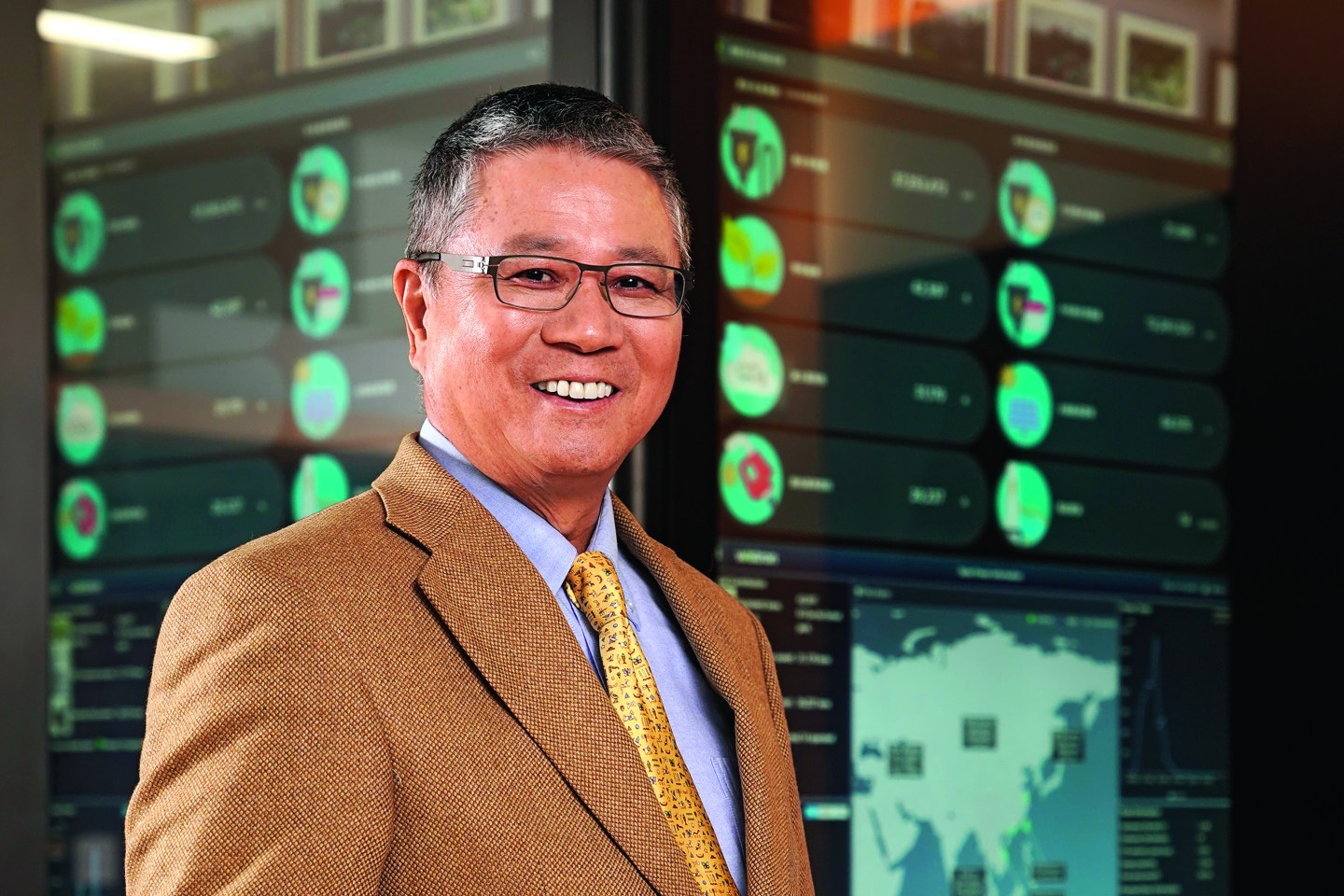
Simon Lin, chair of Wistron, says the company's rise is a story of timing and a decisive early partnership with Nvidia. Eight years after the Taiwanese electronics firm began assembling Nvidia's graphics cards, it now builds the massive AI servers that power the chipmaker's latest processors, propelling Wistron to $70.2 billion in revenue in 2025, more than double the previous year.
Early partnership with Nvidia
Wistron was spun off from laptop maker Acer in 2001, with Lin appointed chair and CEO. The firm initially focused on low‑margin PC assembly, a position Lin describes as the "middle of the smiling curve" where profits are thin. In 2007, the launch of the iPhone eroded the PC market and left Wistron searching for a new direction.
"Even during dark times, you need to make yourself ready for any change in the future," Lin says.
That change arrived when Wistron secured a contract to manufacture Nvidia's graphics cards, a higher‑margin business that later evolved into AI server production.
AI boom fuels explosive growth
When OpenAI released ChatGPT in late 2022, demand for Nvidia's AI‑optimised processors surged. Nvidia turned to long‑standing partners such as Wistron to build ever larger server racks that can house multiple chips. Lin oversaw the construction of a 287,000‑square‑foot plant in Zhubei, Taiwan, which was fully booked through 2026. A nearby textile factory was swiftly converted to increase capacity.
Servers now account for 70 % of Wistron's sales. In the first half of 2026 the company posted $55 billion in revenue, and its climb to No. 198 on this year's Fortune Global 500 represents a jump of 298 places, the largest rise on the list.
US expansion amid tariff pressures
In August 2025 Wistron announced a $761 million investment in two complexes near Fort Worth, covering 1.09 million square feet. The move was prompted by a threatened 32 % tariff on Taiwanese imports, but Lin notes that the US footprint also reduces shipping costs for six‑ton AI servers.
"Even if this decision was slightly forced by tariffs, it became a reasonable one later on," Lin explains.
The Texas facilities are expected to create over 800 jobs and required equipment to be shipped from Southeast Asia because it could not be sourced locally.
Outlook for Wistron
Lin, now 72, describes himself as a "somewhat lazy CEO" who prefers to focus on a few strategic priorities. He sees the AI market as continuously evolving, with new server generations arriving each year rather than every three years. "These aren't strategic decisions but rather very practical challenges, day and night," he says.
Looking ahead, Wistron plans to deepen its role in the AI supply chain, expand its global footprint, and continue leveraging its partnership with Nvidia to meet the growing demand for high‑performance computing hardware.