
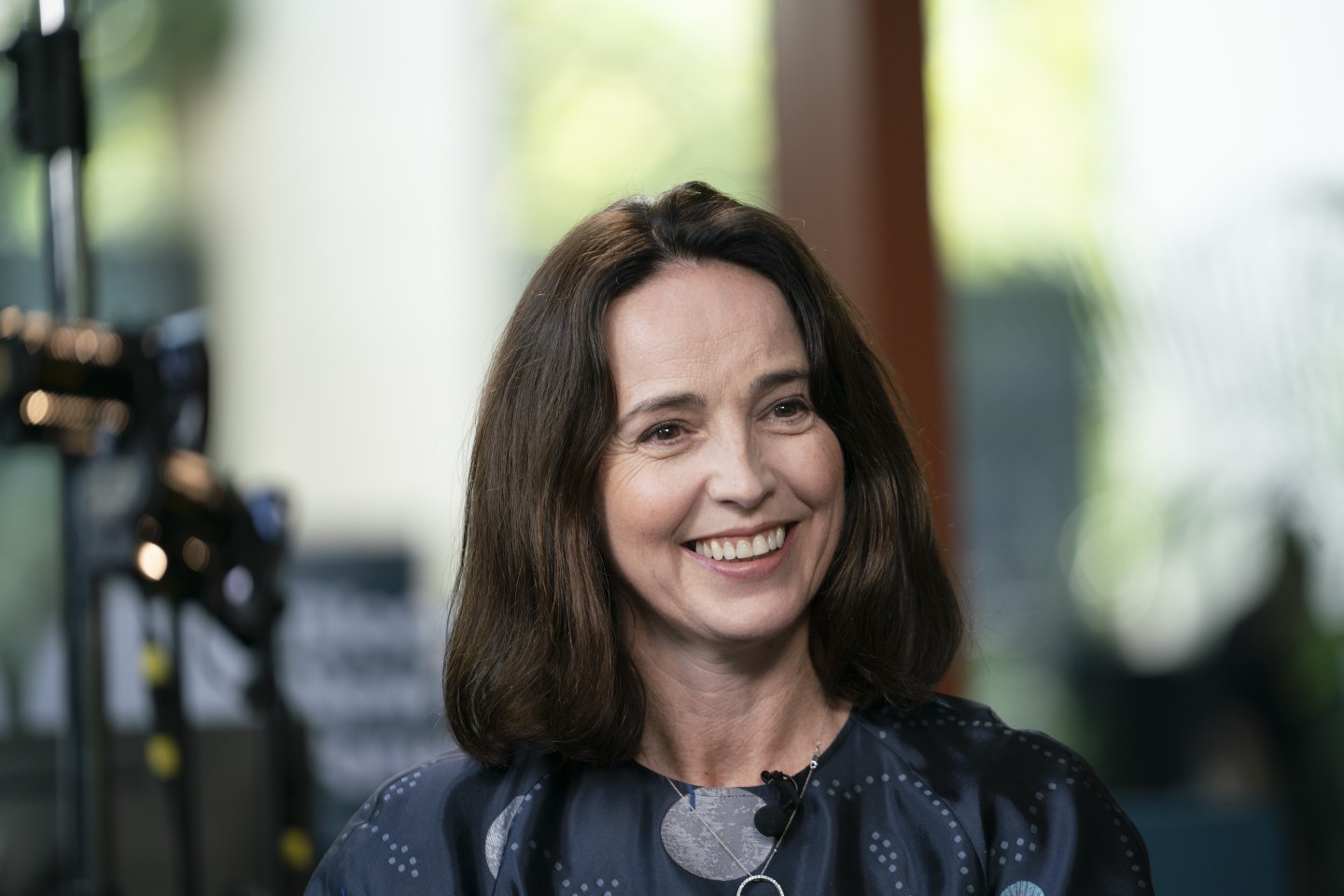
Sarah Friar, chief financial officer of OpenAI, has insisted that artificial intelligence must accelerate financial work without replacing human judgment, setting out a framework for what she calls an AI-native finance function.
Friar leads by example
In a LinkedIn post published on Sunday, Friar shared an article describing how OpenAI uses ChatGPT Work internally, writing that the tool lets teams "spend less time reconciling the past and more time planning the future." She added that AI does not replace financial rigour or human judgment but helps teams find issues sooner, ask better questions and deliver insights while there is still time to act. "As we help other companies transform how they work with AI, it matters that we lead by example," she wrote.
The post attracted hundreds of reactions and comments echoing the same theme: AI speeds the flow of information to decision-makers, yet accountability remains human. Several commenters highlighted the distinction between automating analysis and outsourcing judgment, while others described a shift from finance as a reactive, painful scramble during period-end close to a strategic partner for the board.
Five lessons for an AI-native finance team
Friar expanded the argument on Monday in an essay on OpenAI's website detailing what she has learned since joining the company two years ago. When she arrived, a small finance team supported a business growing at extraordinary speed, she wrote, so the function had to be built from the ground up with AI fundamental to how it works, decides and supports the business. The team set two targets: a zero-day close and continuously updated forecasting.
"The real promise of an AI-native finance function: a team that understands what is happening as it happens, helps leaders see the choices ahead, and gives the business more time to act while the outcome can still change," Friar wrote.
She offered five lessons for chief financial officers:
- Give everyone access, then create a reason to use it.
- Redesign workflows around the decision, not the task.
- Let finance professionals become builders.
- Pair speed with accountability and controls.
- Measure value per unit of intelligence.
Friar cited recent OpenAI research showing that 40 per cent of finance professionals' specialised AI use involves work outside traditional finance, while 22 per cent involves engineering-related tasks. "Finance sits at the centre of strategy, capital, data, risk, and performance," she wrote. "That gives CFOs a unique view of how the company works and a powerful mandate to lead its AI transformation."
Implications for the profession
The takeaway for finance chiefs may be less about adopting a specific AI tool than about rethinking what finance is supposed to do with the time AI returns. By automating reconciliation and routine analysis, teams can shift capacity to forecasting, scenario planning and strategic advisory work that boards increasingly demand.
Other CFO moves
Christine Chambers has been appointed chief financial officer of MicroVision, the Nasdaq-listed provider of advanced perception software, effective 27 August. Chambers brings more than two decades of public-company financial leadership, most recently as CFO of enterprise AI company Fusemachines. Her earlier roles include CFO, treasurer and secretary of PetMed Express and senior vice-president, CFO and treasurer of RealNetworks.
Tim Fox has been promoted to CFO of ACV, the New York Stock Exchange-listed digital automotive marketplace, effective 11 August. Fox joined ACV in 2021 as vice-president of investor relations and was appointed to his current role as vice-president of investor relations and strategic finance in 2024. He succeeds Bill Zerella, who is departing for another CFO role and will serve in an advisory capacity through 2 October. Fox has more than 35 years of experience, including a stint as senior vice-president of investor relations at global software company PTC.
Gen Z drives travel spending
According to the 2026 Bank of America Summer Travel Outlook, 93 per cent of Generation Z respondents either had a summer trip planned or intended to take one, compared with 85 per cent of millennials, 73 per cent of Generation X and 62 per cent of baby boomers. Internal bank data shows Gen Z travel spending rose approximately 8.5 per cent year on year in June, outpacing all other generations, whose travel-related spending increased by just under 7 per cent.
Zuckerberg envisions personal superintelligence
Mark Zuckerberg, chief executive of Meta Platforms, described what he called "personal superintelligence", an AI agent that works "24/7 on your behalf" across every facet of life, in an essay posted to Meta's newsroom on Monday. He noted the technology helps keep him healthy by monitoring sleep and providing training feedback.