
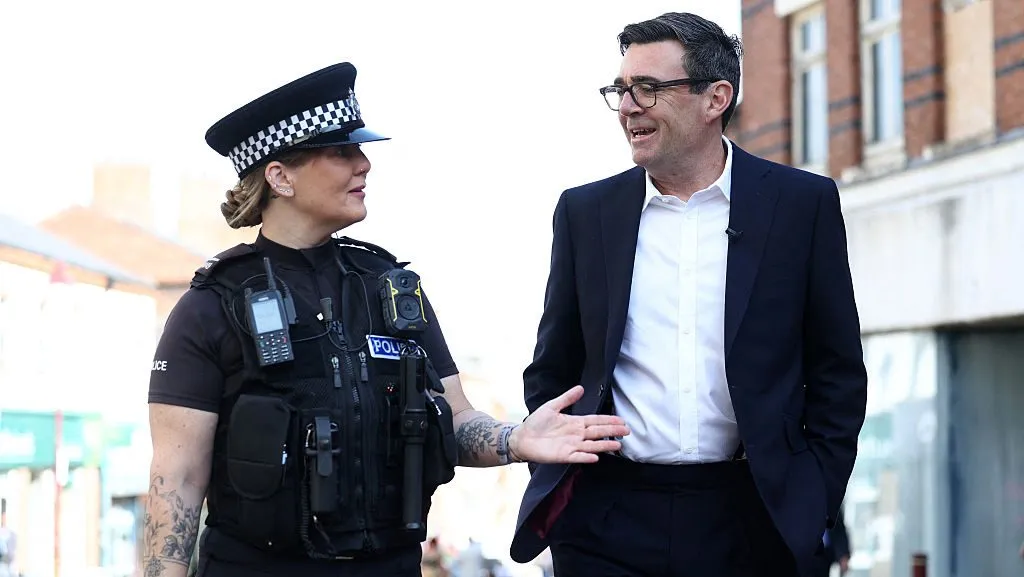
Former Greater Manchester Police detective Maggie Oliver, who now runs the Maggie Oliver Foundation, has renewed criticism of Mayor Andy Burnham over the handling of serious sexual‑offence cases. Oliver argues that recent government announcements reveal a stark disparity between political statements and the legal framework governing the early release of high‑risk offenders.
The issue resurfaced in the case of Shabir Ahmed, who has described himself as the leader of the Rochdale grooming gang. Victims were repeatedly told that Ahmed would be deported after serving his sentence, yet a law dating from before 2003 prevents deportation for offences committed prior to that year. The government’s attempt to find a legal workaround echoes earlier pledges that serious child‑sex offenders would not be released early – a promise that does not extend to pre‑2003 crimes.
Oliver contends that each reversal of policy creates renewed fear and uncertainty for survivors, and that such policy errors undermine public trust in both the government and the criminal‑justice system. She points to a pattern of institutional failures in Greater Manchester, where Burnham, as mayor, oversaw a police force that dismissed victims, ignored intelligence and pursued lighter sentences.
From 2003 to 2014, an NHS employee warned authorities about grooming‑gang activity a hundred times, but the warnings were treated as unreliable. While serving as Police and Crime Commissioner, Burnham established two major inquiries – the Operation Augusta Review in South Manchester and a separate Rochdale Review – both of which Oliver participated in and described as thorough.
A later report, the Assurance Review released in 2025, omitted any survivor testimony, a decision Oliver called indefensible. When Burnham told her that His Majesty's Inspectorate of Constabulary (HMIC) has greater powers than the original independent review team, Oliver responded that greater authority cannot replace the voices of victims who have experienced abuse. She quoted Burnham’s exact words: "His Majesty's Inspectorate of Constabulary (HMIC), the body meant to oversee the police, has greater powers than the original independent review team."
Safeguarding specialists Gary Ridgway and Malcolm Newsam withdrew from the review process rather than endorse findings they could not support. Oliver calls for a systematic overhaul that puts survivor input at the core of any future review, warning that without such changes, a pattern of political posturing followed by legal loopholes will persist, further harming trust.
The discussion also raises questions about the new prime minister’s role in tackling systemic problems that have existed across multiple governments. Oliver noted increasing optimism as more survivors speak out and demand accountability, urging policymakers – including Burnham – to convert rhetoric into concrete reforms that protect vulnerable children and restore confidence in the justice system.