
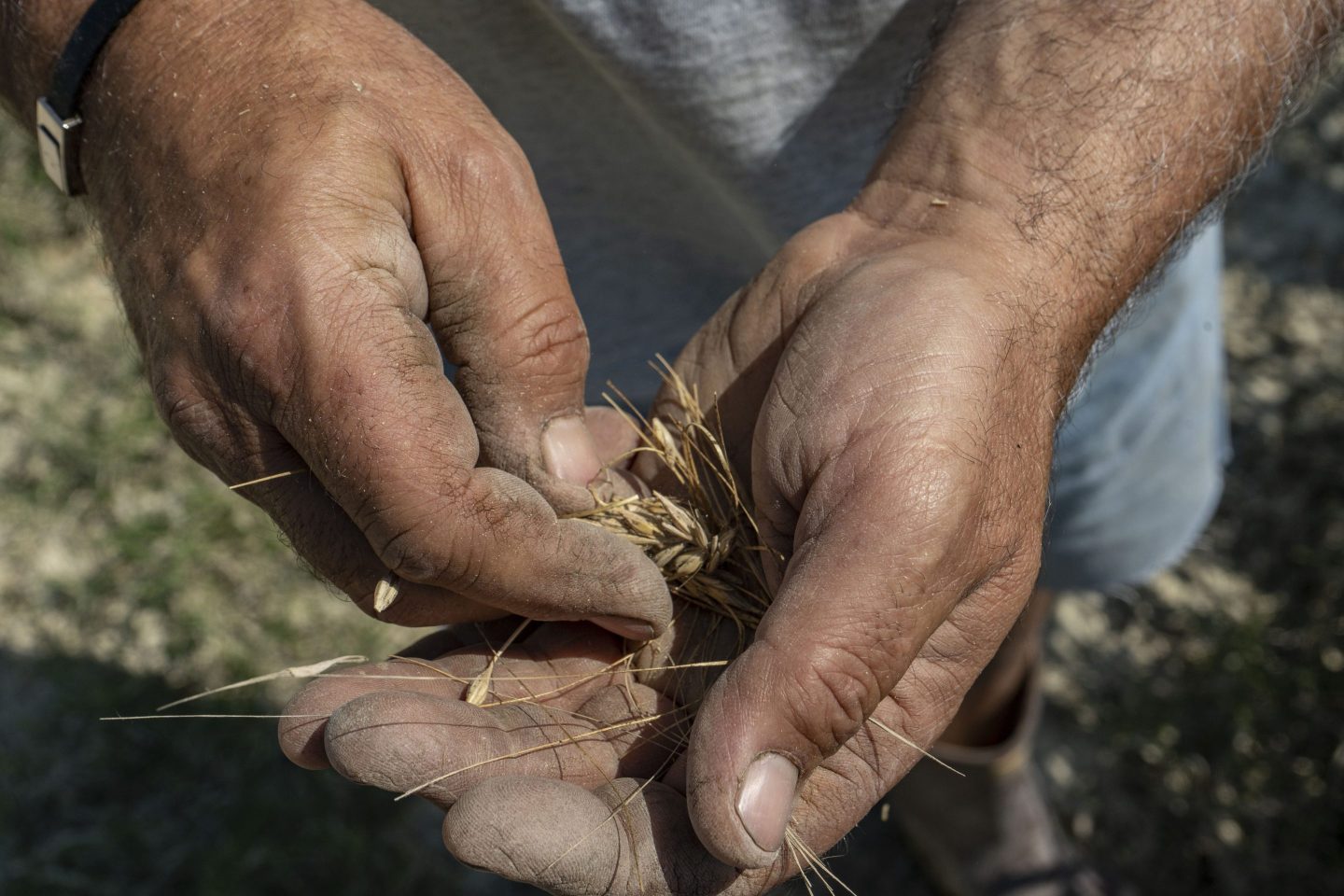
On 7 August, a farmhouse tucked into the hills of Marche became the venue for a hands-on workshop that taught farmers how to save, trade and pass on seeds that cannot be patented. The event, organised by the Rete per l'Agricoltura Naturale (RAN), was led by agronomist Antonio Lo Fiego, technical director of Arcoiris Sementi Bio. Within days a single Facebook post attracted more than 1,600 sign-ups, and the workshop sold out in a week.
Why the seed market matters
The workshop targets a growing problem for growers across Europe. Four multinational agro-chemical groups, Bayer, Corteva, Syngenta and BASF, now control 56 % of the global commercial seed market and 61 % of the pesticide market. Economists warn that a combined share above 40 % can distort competition, while a share above 60 % typically triggers antitrust scrutiny. The farming sector is already operating at or beyond that threshold.
The Distributed Seed House project
RAN calls its initiative the Casa Diffusa dei Semi, a Distributed Seed House, a network of growers who save, reproduce and share seeds free of patents and genetic modification. The first workshop, run on a gift-economy model with no participation fee, focused on selecting, gathering and preserving vegetable seeds. RAN plans to repeat the workshop in future seasons and to expand a 2026 calendar of events that has been selling out within days of opening.
How four firms came to dominate
Industry consolidation over the past decade explains the concentration. Dow and DuPont merged their agricultural divisions to form Corteva. China National Chemical Corporation bought Syngenta and later merged it with Sinochem's farm assets. In 2018, Bayer acquired Monsanto for $63 billion, later absorbing the brand. To satisfy regulators, Bayer sold a package of seed and pesticide assets, including canola, soybean and vegetable lines, to BASF. The same four companies now supply both the seeds farmers plant and the chemicals those seeds are engineered to tolerate.
Patents and legal risk for farmers
Utility patents on seed traits allow companies to restrict who may grow a variety and to require farmers to purchase new seed each season. Unlike older plant variety rights, these patents do not permit farmers to re-plant saved seed without a licence. A farmer who replants patented seed can be sued, even if the seed was saved from a previous harvest.
International treaty backing farmer rights
RAN and its predecessor, the older Rete Semi Rurali, base their work on Article 9 of the FAO's International Treaty on Plant Genetic Resources for Food and Agriculture, which recognises farmers' rights to save, use, exchange and sell farm-saved seed. The FAO estimates that roughly 75 % of crop genetic diversity has been lost over the past century as uniform, commercially bred varieties displaced local ones.
Impact on Italian agriculture
Italy already feels the strain of reduced seed diversity. Extreme heat this year could cut milk production on dairy farms by up to 10 %, and grape harvests in Lombardy's Franciacorta region started at the earliest date on record.
"Taking this path represents a danger for farmers and peasant seeds, as well as for the environment and consumers," said Stefano Mori, coordinator of Centro Internazionale Crocevia.
He added that "covered by industrial patents, NGTs and the products derived from them could accelerate the already worrying concentration of the seed market and contaminate non-cultivated fields with biotech varieties, amounting to a genuine misappropriation of peasant biodiversity and undermining the very survival of organic farming."
What comes next?
RAN intends to hold further workshops and to broaden its network of seed-saving growers throughout Italy and, potentially, the wider European Union. By demonstrating a viable, community-based alternative to the corporate seed system, the group hopes to influence policy discussions on seed sovereignty and antitrust enforcement at the European level. If the model gains traction, it could encourage other regions to adopt similar gift-economy seed exchanges, thereby preserving biodiversity and reducing farmers' reliance on patented varieties.