
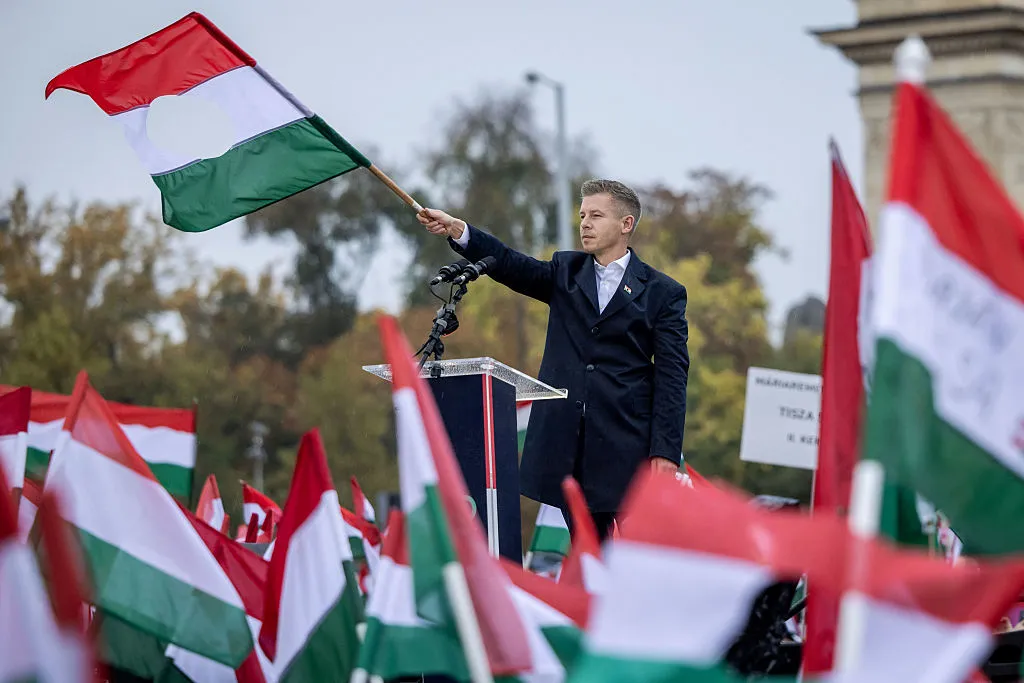
Hungary's parliament has approved a sweeping package of constitutional amendments that reshapes the country's political architecture and targets the institutional legacy of former prime minister Viktor Orbán. The measures, pushed through by the new government of Péter Magyar and his Tisza Party, impose retroactive term limits on the premiership and members of parliament, terminate the mandate of the sitting president, and restructure the Constitutional Court.
Term limits bar Orbán from future office
The 16th Amendment to Hungary's Fundamental Law introduces a lifetime limit of eight years, or two parliamentary terms, for the prime minister. Applied retroactively, the provision disqualifies Orbán, who has served a cumulative 20 years in the role, from ever returning to the post. Critics have labelled the measure "Lex Orbán", arguing it prevents voters from re-electing a leader of their choice. No other parliamentary democracy in Europe imposes term limits on a head of government whose power depends on maintaining a legislative majority.
A companion measure, the 17th Amendment, sets a 12-year term limit for members of parliament. The restriction affects the entire senior cadre of Fidesz and its ally the Christian Democratic People's Party (KDNP), which have dominated Hungarian politics since 1990. Veteran figures on the political left are also disqualified, making a progressive resurgence more difficult. No sitting Tisza MP is affected by the new cap.
President removed by legislative decree
The amendments also terminate the term of President Tamás Sulyok, who was elected by the previous parliament in February 2024 for a five-year term. Magyar had accused Sulyok of being an Orbán loyalist and pressed him to resign. When Sulyok refused, the government inserted a single line into the constitutional package stating that "the term of office of the incumbent President of the Republic terminates today". The move bypassed the impeachment procedure provided for in the Fundamental Law.
Amnesty International Hungary criticised the constitutional coup aimed at unseating the president.
Sulyok appealed to the Venice Commission, the Council of Europe's advisory body on constitutional matters. The Commission said it would rule on his motion at its October plenary session, months after his removal had taken effect.
Judicial overhaul and new anti-corruption body
The 17th Amendment reintroduces a mandatory retirement age of 70 for Constitutional Court judges, forcing out the chief justice and three other justices. The change gives Magyar the opportunity to shift the court's political balance within his first term.
The same amendment establishes a National Office for Asset Recovery and Asset Protection, tasked with tracing and recovering public assets allegedly mismanaged by the previous government. Hungary already possesses institutions with this mandate. The new body is empowered to investigate only Fidesz and operates outside standard judicial and societal oversight. Former LMP leader András Schiffer described its purpose as making it "morally impossible for Fidesz to compete through a series of trials, spiced with staged theatrical performances, and inquisitorial proceedings".
The government has also moved to join the European Public Prosecutor's Office (EPPO), an EU-level body that investigates fraud against the EU budget.
EU releases frozen funds
The European Commission responded to the legislative package by unblocking €10 billion in post-pandemic recovery funds that had been withheld from Budapest over rule-of-law concerns. The decision mirrors the Commission's approach after Donald Tusk returned to power in Poland in 2023, when Brussels rapidly released funds that had been frozen for years despite Tusk's coalition seizing control of public media and the judiciary in ways that drew criticism from legal scholars.
Hungarian liberal legal experts who previously catalogued Orbán's constitutional changes have largely endorsed the new measures. One commentator on Verfassungsblog argued that because the previous legislature violated EU fundamental values, the swift removal of the head of state is "exceptionally acceptable".
Policy pivot on energy and Ukraine
Beyond institutional changes, the new government has begun dismantling Orbán's economic model, starting with price caps and energy subsidies. It has also signalled a shift away from Russian oil and gas regardless of the cost to households and industry.
On foreign policy, Magyar lifted Hungary's veto on the European Peace Facility, the off-budget mechanism that reimburses member states for weapons sent to Ukraine. Budapest no longer opposes opening EU accession talks with Kyiv and has indicated it will not block further sanctions against Russia.
Rule-of-law debate intensifies
Orbán and Fidesz have accused the new government of dismantling checks and balances and persecuting the opposition, creating what they describe as the authoritarian regime the EU once attributed to them. Fidesz's complaints echo the language the European establishment used against Orbán for more than a decade.
Legal analysts note that Hungary's hyper-parliamentary system, where a two-thirds majority can amend the constitution in a single vote without substantive judicial review, was entrenched by Orbán after 2010. The new government is now using those same tools. Germany, by contrast, places certain constitutional fundamentals permanently beyond the reach of any parliamentary majority.
Observers argue the core issue is not procedural but substantive: the amendments appear designed to lock in a pro-EU policy trajectory by structurally weakening the opposition. The European Commission's willingness to reward the manoeuvre with financial transfers reinforces the perception that rule-of-law conditionality is applied selectively, targeting governments that resist Brussels' political agenda while accommodating those that align with it.
The Venice Commission's eventual opinion on the presidential removal may provide the first independent legal assessment of the package. In the meantime, the constitutional architecture that Orbán built to entrench his power has been turned against his movement with speed and precision.