
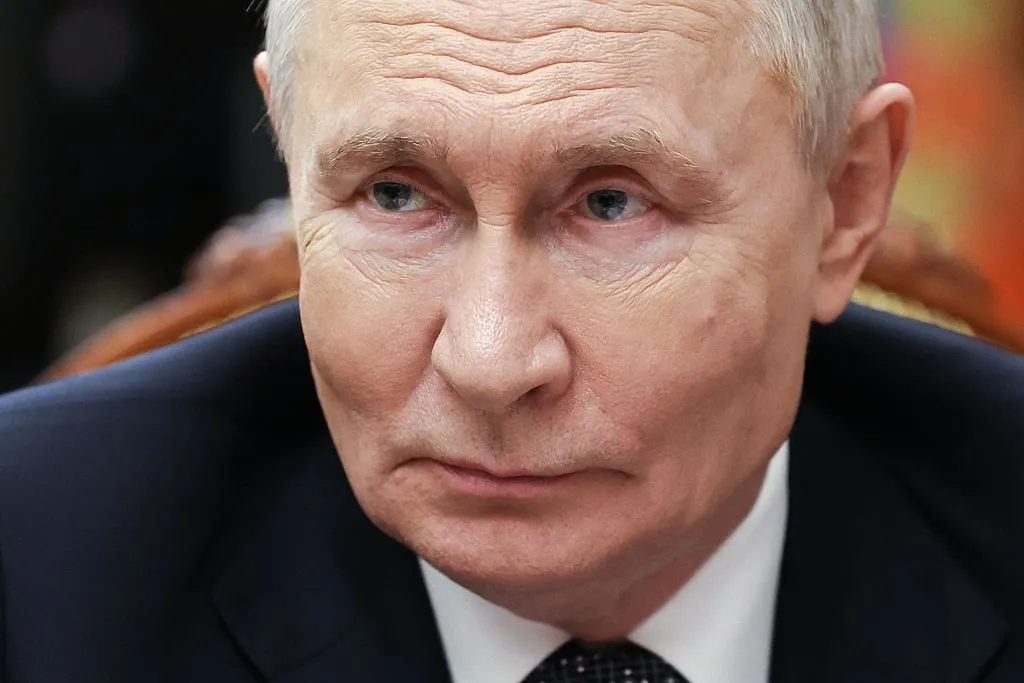
John Ratcliffe flew to Moscow last week, meeting senior Russian officials in a trip that has been interpreted as a signal of de-escalation amid the ongoing war in Ukraine. While the United States has not disclosed the exact agenda, the timing and context suggest a diplomatic effort to prevent the conflict from expanding beyond Ukraine's borders.
Why the meeting matters for Europe
The war in Ukraine already strains European security, and any escalation could draw NATO members into a broader confrontation. Vladimir Putin has hinted at a large autumn offensive, and Russian forces continue to advance in the Donbas region, targeting cities such as Kramatorsk and Sloviansk. If Moscow were to test NATO's cohesion, the consequences would reverberate across the continent.
European leaders have warned that hybrid tactics, including drone attacks and cyber operations, could serve as a prelude to conventional warfare. A recent incident in Leipzig, where a drone carrying 600 g of Semtex explosives struck a parked Ukrainian cargo aircraft without detonating, illustrates the growing threat of low-intensity attacks that can quickly spiral.
European security policy and the grey zones
International law distinguishes between defensive support for a party in a conflict and direct participation in hostilities. Supplying defensive weapons to Ukraine is widely accepted, whereas providing offensive arms or conducting joint exercises can be viewed as crossing a red line. NATO has tried to stay within the defensive zone, but the line remains blurry.
Western raids on Russian shipping and the provision of British-made drone technology for strikes inside Russia have already provoked strong Russian protests. Russian officials labelled the United Kingdom a participant in the war after Prime Minister Andy Burnham approved the transfer of technical blueprints for the Franco-British Storm Shadow cruise missile.
Political currents in the EU
Economist Branko Milanović warned that a growing appetite for confrontation exists in the Nordic and Baltic states, as well as in the United Kingdom and Germany. He described a "Nordic-Baltic coalition" that appears ready to confront Russia, echoing the fervour that preceded the First World War.
Within the EU, the most vocal foreign-policy figure is Kaja Kallas, the bloc's High Representative for Foreign and Security Policy. Her stance has been described by some commentators as the most hawkish in Europe, reinforcing the perception that the Union is preparing for a possible escalation.
What could happen next?
Diplomatic channels between the United States and Russia remain open at multiple levels, including intelligence and nuclear policy. The Ratcliffe visit may have been an attempt to reaffirm US positions and to coordinate responses should a NATO member be attacked.
One potential flashpoint is the seizure of Russian assets held in Europe, estimated at around €200 billion and largely stored at the clearing house Euroclear in Brussels. Past attempts to confiscate these funds have stalled over legal concerns, but any future move could trigger a strong Russian retaliation.
In the short term, European governments are likely to continue monitoring Russian military movements while seeking ways to reinforce NATO's deterrence posture. Simultaneously, they will weigh the political and financial costs of deeper involvement in Ukraine, including the prospect of extending security guarantees and accelerating EU enlargement.
the Ratcliffe-Moscow talks underscore the delicate balance between deterrence and dialogue. While the risk of a wider war remains, sustained diplomatic engagement may be the most viable path to prevent escalation and to preserve European stability.