
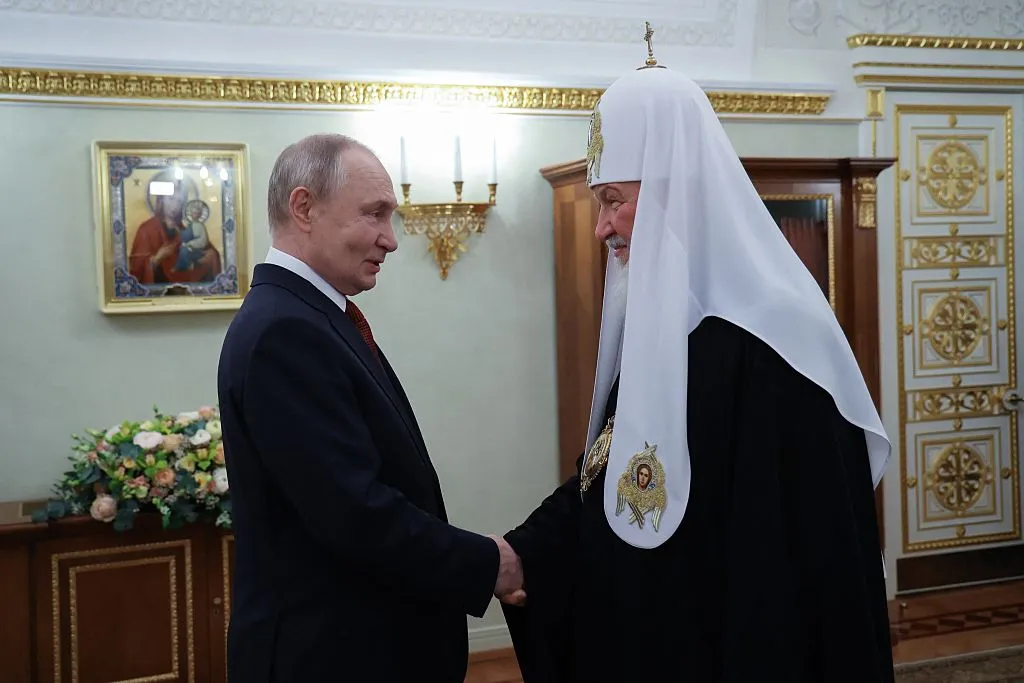
Patriarch Kirill has openly defended Russia's invasion of Ukraine, describing the conflict as a holy war and promising spiritual absolution for soldiers who die on the battlefield. His statements have reverberated far beyond Moscow, influencing Russian-affiliated Orthodox groups that operate in European towns and cities.
From Christmas Markets to Public Protests
Women in white headscarves selling icons, matryoshka dolls and festive decorations once added a familiar charm to markets in Winchester, Szczecin, Belfast and Stockholm. Since 2022, however, the stalls run by Belarusian nuns linked to the Saint Elisabeth Convent in Minsk have become flashpoints. In Winchester, the cathedral barred the nuns after it emerged they supported the invasion. In Szczecin, pro-democracy activists protested outside their stall, accusing shoppers of backing Russian aggression. In Belfast, Ukrainian groups urged the city council to refuse future permits, while the Church of Sweden warned that the nuns "use their income to support Russian nationalism" and have "close ties with GRU".
Churches Near Strategic Sites
An open-source investigation by the Kyiv-based Molfar Intelligence Institute, published in late 2024, concluded that the Russian Orthodox Church has been constructing churches close to military bases, government buildings and critical infrastructure across Europe. The report cited examples in Bulgaria, the Czech Republic, North Macedonia and elsewhere, describing "spies in cassocks" as an alternative to diplomatic cover after the expulsion of Russian embassy staff.
"We would be particularly foolish," said one Czech MEP, "if we did not recognise that Russia is undeniably using the Orthodox Church to carry out its hybrid warfare."
In the Czech resort town of Karlovy Vary, a priest was expelled on suspicion of hostile activities. In Sweden, the Church of the Holy Mother of God of Kazan in Västerås was built on land bought by Rosatom, the state-owned nuclear corporation, and sits near an airport, a water-treatment plant and energy facilities. A researcher at the Swedish Defence University warned that military exercises near the airport could be observed from the church.
Political Reactions and Legal Moves
European governments have begun to push back. Finland closed a Moscow-linked Orthodox church near its naval base in Turku. Estonia's parliament ordered all Orthodox churches to sever ties with Moscow or face closure by year-end. In the Baltic states, the issue is especially sensitive because large Russian-speaking minorities associate Orthodoxy with cultural identity.
In Estonia, the Pühtitsa Convent, directly subordinate to Patriarch Kirill, resisted the order. Abbess Filareta Kalatšova argued that leaving the Moscow Patriarchate would breach church law, while officials noted the convent had changed its affiliation in the past.
Why It Matters for Europe
The intertwining of religious institutions with Kremlin policy creates a channel for propaganda, fundraising for the war effort and potential espionage. As the conflict in Ukraine continues, the presence of Russian-aligned churches near NATO installations and EU institutions raises security concerns that go beyond theological debate.
What Comes Next?
European security agencies are expected to deepen investigations into the alleged espionage network. The EU may expand sanctions to target church properties and financial flows linked to the Russian state. Meanwhile, the Russian Orthodox Church is likely to double down on its narrative, using religious rhetoric to justify the war and to rally support among believers across the continent.
For communities that host these churches, the challenge will be balancing religious freedom with national security, a debate that is set to shape policy discussions in capitals from Brussels to Tallinn in the months ahead.