
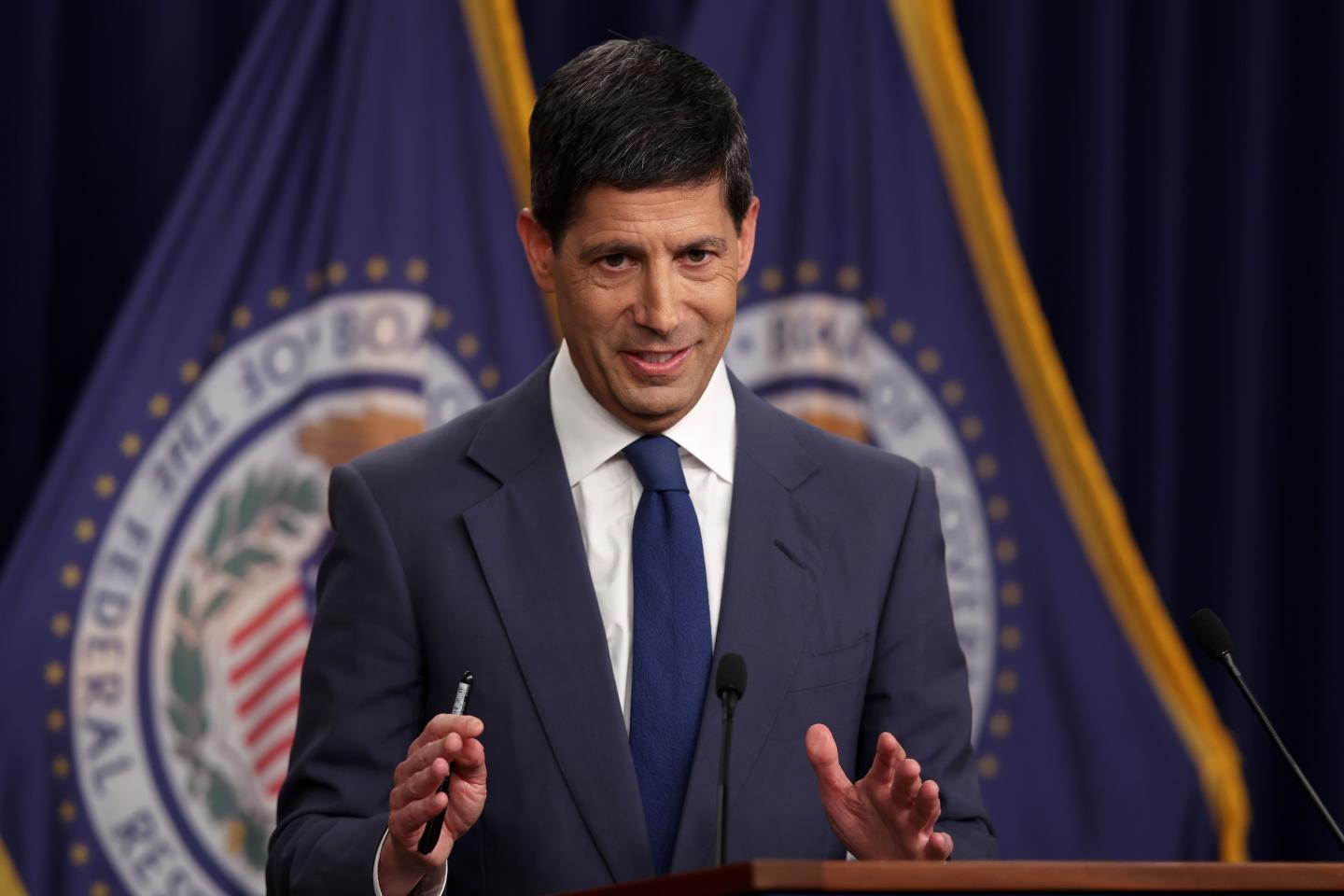
Kevin Warsh used his Jackson Hole remarks to flag an unconventional metric that could reveal whether artificial intelligence is delivering the productivity boost businesses expect: token prices. Tokens measure the amount of data AI models process, and many providers bill customers per token consumed.
AI token prices as a new gauge
Warsh described AI as a possible "new factor of production" and asked whether firms will continue to pay a premium for tokens from the most advanced models even as prices for older versions drift toward marginal cost. He did not propose token prices as a formal Federal Reserve indicator, but suggested they could illuminate how the AI market is evolving.
Gregory Daco, chief economist at EY Parthenon, said Warsh appears to view token prices as a window into competition among AI providers, model quality differentials, pricing strategies and underlying computing costs.
"Pricing power at the frontier, not usage growth, is becoming the real scoreboard for whether AI is creating value or just consuming capital," said Luke Lango, technology analyst and publisher of Innovation Investor.
Interpreting price movements is not straightforward. Falling token prices could signal that models are becoming more capable while costs drop, a sign of genuine productivity gains. Conversely, a slide in prices might indicate that models are becoming interchangeable, forcing providers to compete on price and raising doubts about the return on the massive capital flowing into AI.
Implications for finance chiefs
For chief financial officers, token costs are a new line item in budgeting. Yet lower prices do not automatically translate into higher returns.
"For CFOs, the more relevant question is whether AI adoption is generating measurable productivity gains, improving margins, or creating new revenue opportunities," Daco added.
The broader issue, Warsh implied, is how much value AI creates and who captures it. European CFOs are likely to watch token-price trends alongside traditional cost-benefit analyses as they decide how aggressively to embed AI in operations.
Recent CFO appointments
Samuel J. Poletti has been named chief financial officer of Amrize (NYSE: AMRZ), effective 24 August, succeeding Baris Oran. Poletti, who has overseen the company's spin-off and served as chief strategy and M&A officer, brings more than two decades of experience from Holcim and a background in industrial-sector analysis at Walleye Capital and Morgan Stanley.
Christopher Lee was appointed CFO of Gold Coast Health Plan. Lee arrives with over 25 years of healthcare finance experience, most recently rebuilding financial systems at Healthcare In Action and overseeing a $5.2-billion budget at SCAN Health Plan.
AI sentiment among workers
A new analysis by Glassdoor shows that mentions of AI in employee reviews have jumped 240% year-over-year, but the tone has shifted dramatically. Positive sentiment fell from 81% in 2019 to 43% today, while 53% of reviews now carry a negative tone. The split runs along generational lines: nearly half of Gen X reviewers remain positive, compared with 33% of Gen Z and 40% of Millennials.
Critical reviewers are six times more likely to cite layoffs, and employees who view AI positively are 47% less likely to be actively job-searching, suggesting that how organisations roll out AI could become a retention issue for finance leaders.
Looking ahead
As token prices continue to fluctuate, CFOs in Europe and beyond will need to assess whether AI is delivering the promised efficiency gains or merely adding to capital expenditure. Monitoring these signals alongside broader economic indicators will help finance chiefs decide how to allocate resources in a rapidly changing technological landscape.