
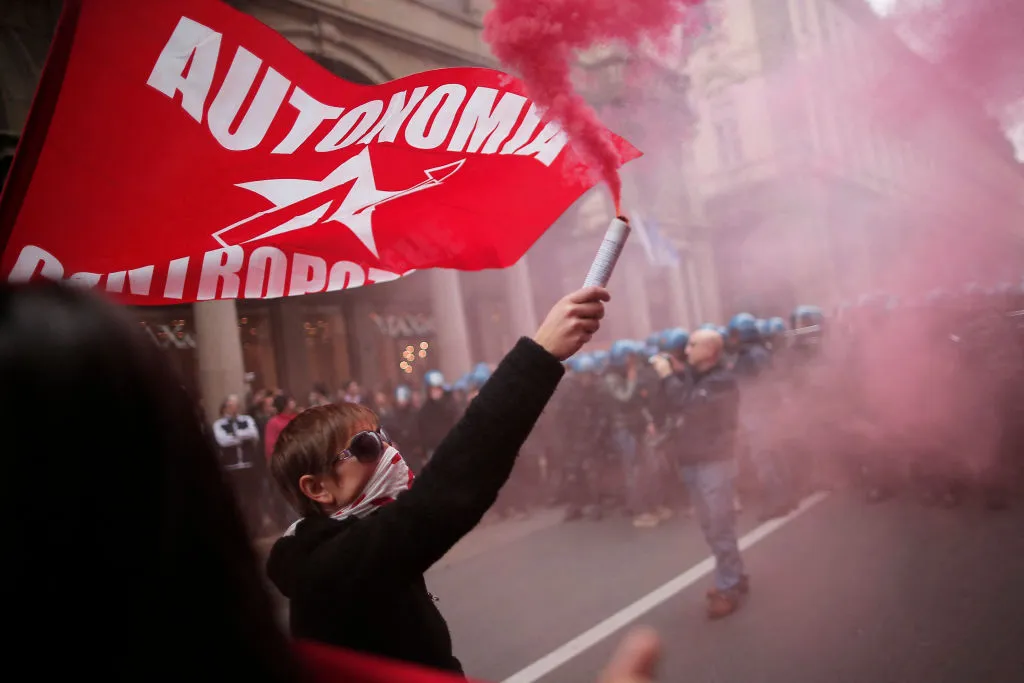
Police entered the Askatasuna social centre in Vanchiglia, a district of Turin, on 18 December 2025 and removed the people who had been running it for almost thirty years. The operation was overseen by the chief of police and carried out under directives from the Ministry of the Interior.
Background to the raid
Askatasuna, meaning “freedom” in Basque, had provided informal help desks, workshops and a meeting space for local residents. Its eviction is described as part of an escalating clash between state authorities and a coalition of anarchist citizen committees and pro‑Palestinian activists.
Turin has a long‑standing reputation for radical politics, linked to Antonio Gramsci’s teachings and the militant unions of the 1970s that opposed Fiat’s industrial power. The former Mirafiori Fiat plant once employed more than 60,000 workers on a site of three million square metres, roughly the size of 420 football fields.
In recent years the city has seen a revival of autonomous social centres that host environmental activists, anti‑fascist groups and supporters of the No‑TAV movement opposing the Turin‑Lyon high‑speed rail. The government presented the eviction as part of a wider security strategy promoted by Prime Minister Giorgia Meloni.
New security measures
In February 2026 Meloni’s government enacted the “Pacchetto Sicurezza”, establishing “red zones” with permanent police presence and permitting pre‑emptive arrests. Interior minister Matteo Piantedosi indicated that more evictions of unauthorised squats are expected, especially in areas labelled as “urban decorum” hotspots.
Opponents claim the new measures endanger civil liberties and target neighbourhoods already under pressure from gentrification and a growing tech‑sector presence. Lawyer Gianluca Vitale, who represents the activists, warned that the rules blur the distinction between legitimate protest and criminalisation.
Local reaction
Activist Riccardo argued that conflict is a central concept, yet the system inflicts everyday violence on all citizens living in their communities. Protest groups, including the Torino per Gaza network and local mothers’ collectives, have pledged to keep organising rallies. Police vehicles and protest banners have been observed on the streets of Turin following the eviction.
Prime Minister Giorgia Meloni is nearing a record length of service for a post‑war Italian government, despite a recent loss in a referendum on judicial reform and a decline in support from former U.S. ally Donald Trump.