
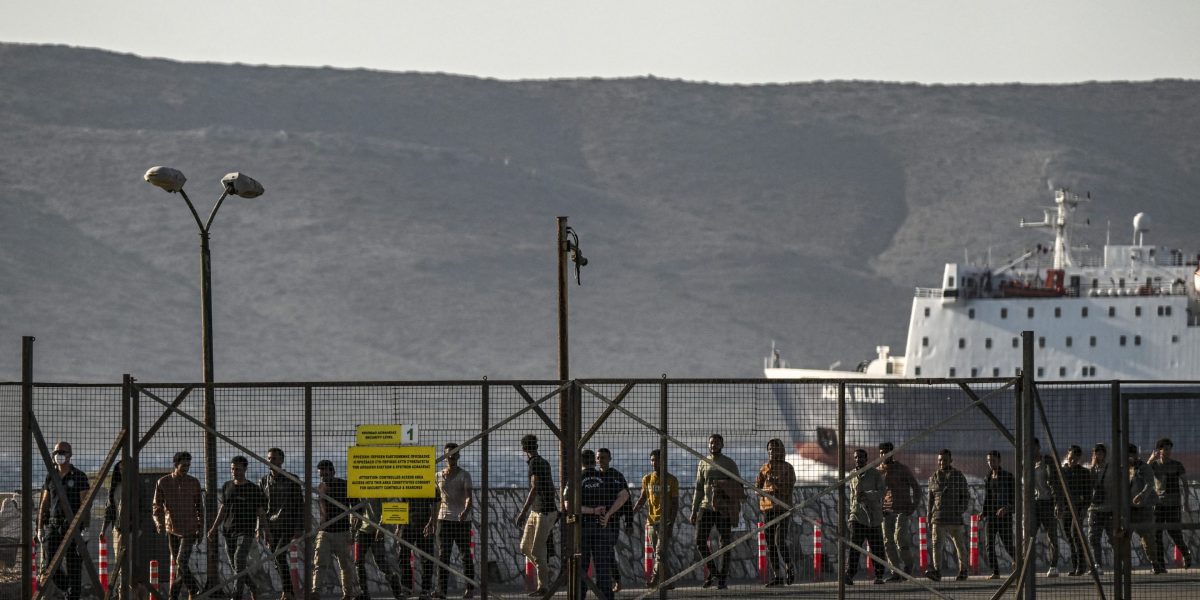
Morten Bødskov, Denmark's minister of immigration and integration, announced on Friday that Denmark, Germany, the Netherlands, Austria and Greece have agreed on a common model for migrant "return hubs" in non-EU states, with a target to start operations by 2027.
Agreement on return hubs
The ministers met in Copenhagen for a one-day session and said the five countries will negotiate with governments, mainly in Africa, to identify suitable sites. The plan is to provide a location where asylum seekers whose claims have been rejected can stay while their return is arranged, rather than being sent directly back to their country of origin.
"We are moving forward toward what is actually a fundamental transformation of the common European migration and asylum system," Bødskov said.
He rejected the notion that the hubs are merely detention centres, insisting that the International Organization for Migration (IOM) and the United Nations Refugee Agency (UNHCR) would monitor the facilities.
Human-rights concerns
Human-rights organisations have warned that relocating migrants to third-country sites could make it difficult to enforce EU standards. Council of Europe Commissioner for Human Rights Michael O'Flaherty called vague assurances of compliance "not enough", and Brussels-based PICUM described the scheme as an attempt to move people out of sight of EU obligations.
The UNHCR said it had not been approached with details of the proposal and could not comment, while IOM said discussions were still exploratory and that it had only offered technical advice on safeguards.
Legal and political backdrop
In June, EU lawmakers approved a change allowing member states to set up centres outside the bloc, either alone or in small coalitions, to host rejected asylum seekers. Bart van den Brink, the Netherlands' minister of asylum and migration, called the initiative "groundbreaking".
The shift follows growing public pressure for tougher measures against irregular migration and follows earlier experiments such as Rwanda's agreement with European nations to host asylum seekers.
What happens next?
The ministers said they expect to sign a first agreement with a partner country by early 2027. Technical talks and missions to potential host states will continue to assess human-rights conditions and living standards. The EU will need to ensure that any hub complies with European and international law, and that migrants' rights are protected throughout the process.
As the negotiations progress, scrutiny from NGOs and international bodies is likely to intensify, putting pressure on the five countries to demonstrate that the hubs are more than a "new chance" for irregular migrants and that they respect the EU's legal commitments.