
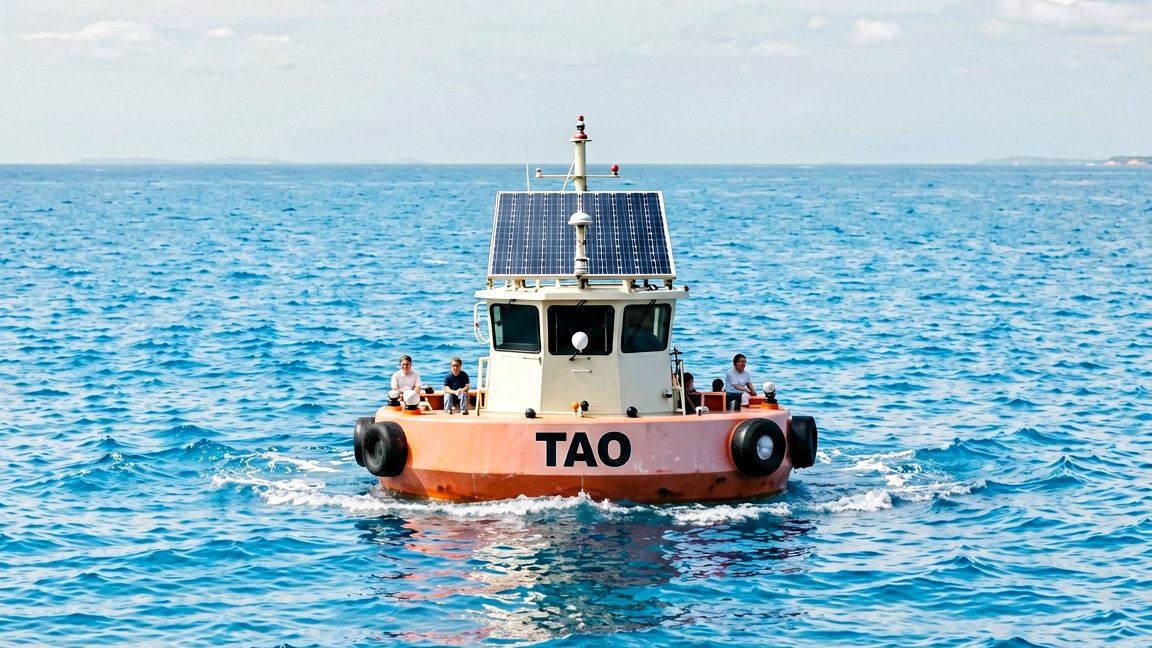
The World Meteorological Organization (WMO) confirmed on 2 September 2026 that the ongoing El Niño has pushed tropical Pacific sea-surface temperatures 2.2-2.6 °C above the 1991-2020 climatological average, earning the event the "Super-El Niño" label.
What makes this El Niño "super"?
The WMO defines a "Super-El Niño" when sea-surface temperature (SST) anomalies exceed 2 °C, a threshold that marks extreme oceanic heating. In July-August 2026 the central equatorial Pacific recorded SST anomalies of 2.2-2.6 °C, while subsurface waters between the surface and 300 m depth were up to 8 °C warmer than the long-term baseline. Both figures come from the WMO press release dated 2 September 2026.
| Metric | Value | Period | Source |
|---|---|---|---|
| Sea-surface temperature anomaly | 2.2-2.6 °C | July-August 2026 | WMO press release, 2 Sept 2026 |
| Sub-surface temperature excess | ≈8 °C | July-early August 2026 (0-300 m depth) | WMO press release, 2 Sept 2026 |
| Projected land-temperature deviation | Above climatological mean (exact °C not quantified) | Sep-Nov 2026 | WMO press release, 2 Sept 2026 |
European weather outlook for autumn 2026
In the same statement the WMO warned that global land-area temperatures will remain above the long-term mean for the September-November 2026 period. European climate models, including those run by the European Centre for Medium-Range Weather Forecasts (ECMWF), translate that global signal into regional risk patterns.
For Germany, the forecast translates into a heightened probability of late-summer heat waves that can push temperatures above 30 °C in the north and well beyond 35 °C in the south. The German Weather Service (DWD) has already highlighted that an above-average land-temperature anomaly can exacerbate drought conditions in the Rhine basin, where soil moisture is already low after a dry spring.
In the Mediterranean, the WMO's projection aligns with a "dry-and-hot" scenario that could extend the 2025-2026 heat-wave season. The taz article cited in the packet notes that the extreme El Niño raises concerns about water scarcity and agricultural stress in Spain, Italy and Greece.
Further north, the same warming signal raises flood risk in Central Europe. Warmer air holds more moisture, and the WMO's analysis links the Super-El Niño to an increased likelihood of heavy precipitation events in the Danube catchment during October and November. The ECMWF commentary, referenced in the packet, underscores that such events could strain river-management infrastructure that is already operating near capacity.
Energy implications across the EU
Above-average temperatures affect energy demand in two opposite ways. In Germany and other temperate zones, a prolonged heat spell reduces winter heating demand but spikes electricity consumption for cooling and for water-pumping in agriculture. The German Federal Ministry for Economic Affairs and Climate Action has warned that a sudden surge in cooling demand could stress the national grid, which is still adapting to higher shares of renewable generation.
Conversely, the Mediterranean's drought risk threatens hydro-electric output in Spain and Italy, where reservoirs are already below 40 % of capacity according to national water-management agencies. The WMO's forecast therefore adds a layer of uncertainty to the EU's 2026-2027 energy-security planning, especially as the bloc seeks to phase out coal by 2030.
Policy response and preparedness
European institutions have begun to factor the Super-El Niño into their climate-adaptation strategies. The European Commission's "Fit for 55" package, which aims to cut net-greenhouse-gas emissions by 55 % by 2030, now includes a specific clause on "climate-extreme preparedness". The clause references the WMO's 2026 forecast as a trigger for activating emergency water-allocation plans in the Mediterranean and for pre-positioning flood-defence resources in Central Europe.
Germany's Federal Ministry for the Environment, Nature Conservation, Nuclear Safety and Consumer Protection (BMU) has announced a cross-ministerial task force to monitor the El Niño's evolution and to coordinate response measures with the DWD, the Federal Agency for Water Management and the energy regulator. The task force will meet weekly until the El Niño is expected to wane in February 2027, as indicated by the WMO timeline.
In the Nordics, the forecast of above-average land temperatures is less about heat stress and more about the risk of rapid snowmelt in early winter, which could lead to flash-flood events in river valleys. The Finnish Meteorological Institute, cited in the ECMWF commentary, is already issuing early-season flood warnings for the Kymi and Oulujoki basins.
What comes next?
The WMO expects the El Niño to persist until at least February 2027. European weather services will therefore continue to update seasonal outlooks on a monthly basis. The next major data point will be the WMO's July 2026 mid-season assessment, which will refine the projected land-temperature deviation for the autumn months.
Policymakers across the EU are watching those updates closely. In Germany, the upcoming Bundestag debate on the "National Drought Management Plan" is scheduled for early October 2026, and the outcome will likely reference the WMO's Super-El Niño warning. In the Mediterranean, the EU's Water-Management Partnership is set to publish a joint risk-assessment report in November, explicitly modelling the El Niño's impact on water-availability for agriculture.
For citizens, the practical implication is simple: expect hotter days, drier soils and a higher chance of heavy rain later in the year. Energy providers advise consumers to prepare for possible spikes in electricity demand for cooling, while farmers are urged to adopt water-saving irrigation techniques before the autumn rains arrive.
As the Super-El Niño unfolds, the balance between climate-adaptation policy and on-the-ground preparedness will be tested across Europe. The next few months will reveal whether the continent's early-warning systems and cross-border coordination can mitigate the heightened risks that the WMO's unprecedented temperature anomalies portend.