
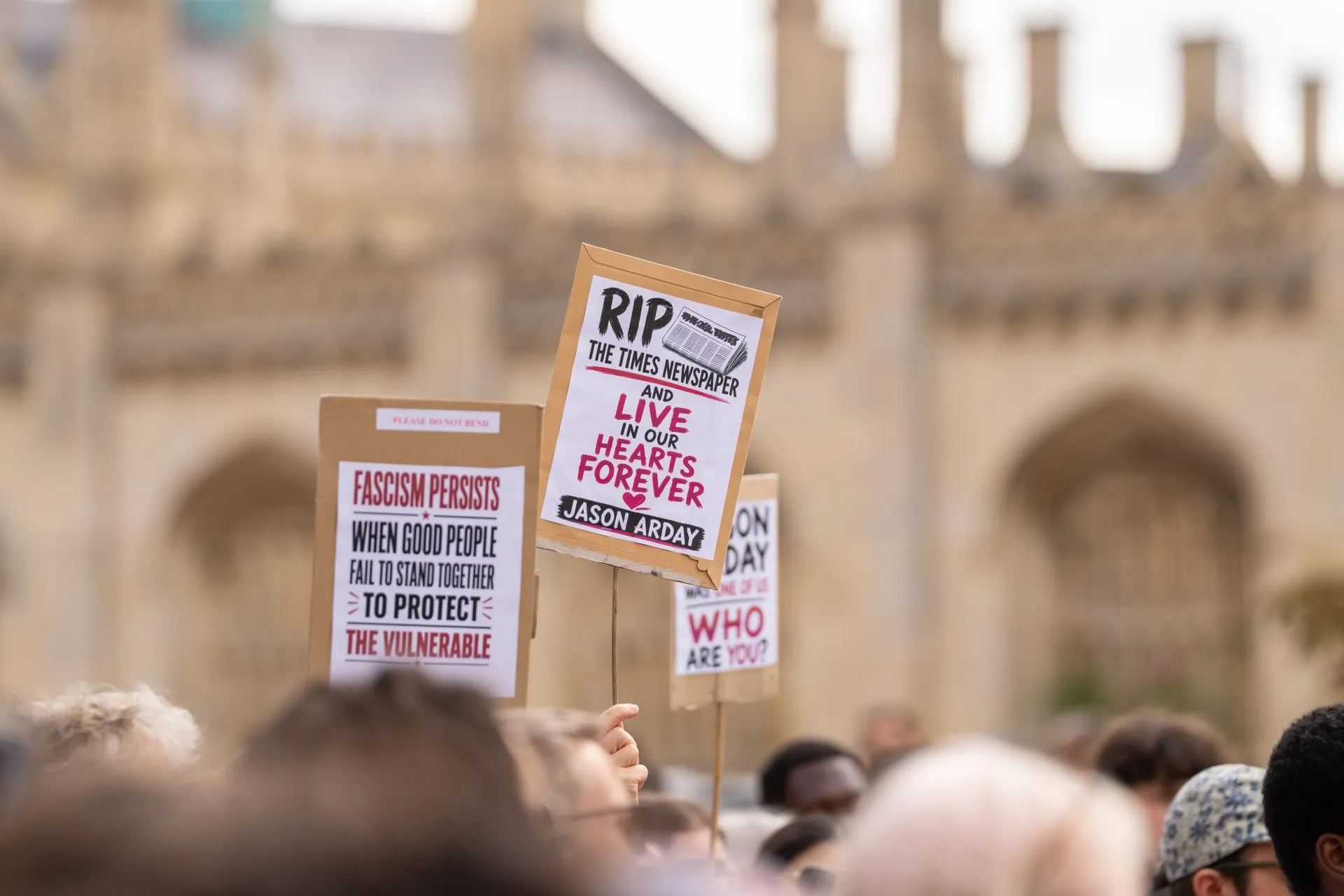
Jason Arday, a former professor at the University of Cambridge, took his own life in 2023 after a high-profile plagiarism investigation. His death has revived a broader conversation about how journalists, politicians and universities respond to suicide and whether the tragedy is being used to silence scrutiny.
What led to the tragedy?
Arday, who specialised in sociology and education, faced accusations that large parts of his academic work were not his own. The allegations were amplified by a series of articles in major British newspapers and a detailed investigation by The Guardian. While the university eventually removed him from his chair, the pressure on Arday intensified, culminating in his suicide at the age of 44.
Earlier, a similar pattern unfolded in 2019 when Sophie Hingst, a German-born historian who had earned a doctorate at Trinity College Dublin, was exposed for fabricating a Holocaust family history. Her blog, "Read On, My Dear, Read On", claimed that 22 relatives had perished in the Holocaust and that she carried her grandmother's yellow star. An exposé in Der Spiegel revealed that none of these claims were true. Hingst's mother, Rachel, told a journalist, "My daughter has many realities," highlighting the depth of the deception. A month after the article was published, Hingst died by suicide at 31.
Why does it matter?
Both cases illustrate how personal tragedy can become a weapon in public debates. Labour MP Dawn Butler wrote to the Independent Press Standards Organisation, accusing several newspapers of a "harassment campaign" that she believes contributed to Arday's death. The Prime Minister called for a period of reflection on how the events unfolded, while classicist Mary Beard urged people to remember the human cost rather than focus on institutional criticism.
The use of suicide as an argument raises ethical concerns. The Samaritans, a UK charity that provides emotional support, warn against speculating about motives or attributing a single cause to a suicide. Their guidance stresses that suicide is rarely the result of one factor and that sensationalist coverage can have a contagion effect.
"You do that, sweetie," the Samaritans founder replied, "and I'll find out where you're buried and come and piss on your grave."
This stark response underscores the organisation's stance that threats of self-harm should not be used to manipulate or silence others.
What happens next?
The debate is likely to influence future media practice and university policy. Press regulators may face pressure to balance the public's right to know with the potential harm of intense scrutiny. Universities, including Cambridge, are being urged to review how they handle allegations of academic misconduct and to provide better mental-health support for staff under investigation.
At the same time, the Samaritans continue to promote responsible reporting. They advise journalists to avoid graphic details, to focus on facts rather than speculation, and to provide information about support services, such as the free helpline 116 123.
In the coming months, parliamentary committees may examine the role of the press in high-profile suicides, while advocacy groups are likely to push for clearer guidelines on how institutions should protect vulnerable individuals without compromising accountability.
the deaths of Arday and Hingst remind us that suicide is a tragedy, not a tool for argument. The challenge for Europe's media, academia and politicians is to ensure that the pursuit of truth does not become a weapon that silences the very voices it seeks to protect.